
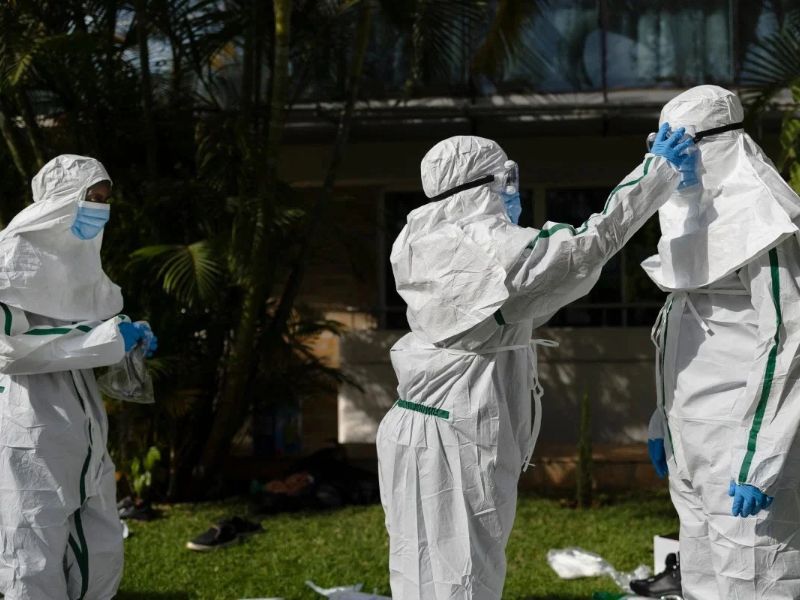
The woman who tested positive for Ebola in Nigeria is the wife of a Swiss diplomat based in Abuja, Reuters has reported.
Switzerland’s Federal Department of Foreign Affairs said the 42-year-old woman, who was born in Uganda, was believed to have contracted the virus while travelling there. However, investigators have yet to establish the exact source of her infection.
The woman tested positive on October 20. Nigerian authorities described the diagnosis as the country’s first confirmed Ebola case in more than a decade.
In its statement to Reuters on Thursday, the Swiss foreign ministry said the woman had spent about a week at a private clinic in Abuja with symptoms before her diagnosis.
“She is believed to have contracted the virus whilst travelling to Uganda around two weeks ago,” the ministry said.
The case has raised concerns about exposure risks and the need for effective disease surveillance. Readers can also follow other national developments, including Enugu Government’s Efforts to Sustain Development Gains.
Swiss Diplomat’s Wife Remains Hospitalised
The Swiss government confirmed that the woman’s husband was in isolation but had not developed symptoms.
The ministry said he had travelled with his wife during the period when she was believed to have contracted the virus.
“Her husband is in isolation; he has not shown any symptoms. He was travelling with his wife when she is believed to have contracted Ebola,” the statement said.
Health officials continue to monitor the situation while investigators establish the woman’s movements and identify people who may have been exposed.
The response highlights the importance of timely reporting and public safety measures. Related Nigerian reports include Oyo Police’s Rescue of 17 Children, which also focuses on public protection.
Source of Ebola Infection Remains Unclear
Authorities have not yet confirmed where the woman contracted the virus.
Ugandan officials said she travelled to eastern Democratic Republic of the Congo before passing through Uganda. However, the World Health Organisation (WHO) and the Africa Centres for Disease Control and Prevention (Africa CDC) said they had not received verified information confirming that she visited the DRC.
Africa CDC official Wessam Mankoula said Nigeria and Uganda were exchanging information to reconstruct the woman’s movements.
“So far, there is no validated information (that) this case traveled to DRC (Democratic Republic of Congo),” Mankoula said during an online press conference on Thursday.
The investigation remains focused on establishing the woman’s travel history and possible exposure. Readers can also see the Federal Government’s Update on Jobs Accessible Without Connections for another report on public institutions and government affairs.
WHO Provides Details of Woman’s Movements
WHO representative in Nigeria Pavel Ursu said information received by the organisation showed that the woman returned to Abuja on October 3.
According to Ursu, she had been in Uganda from September 16 before returning to Nigeria.
“The facts which we have received is that the patient returned to Abuja on October 3, being away from September 16 in Uganda,” he said.
Ursu added that the woman remained hospitalised and that her biochemical markers were improving.
Despite the reported improvement, investigators are still working to establish the source of the infection and reconstruct the woman’s movements before her admission.
WHO emergency response manager Patrick Otim said investigators were also identifying the health facilities she visited after developing symptoms but before she was hospitalised.
The findings could help officials determine possible exposure points and identify people who may need monitoring. For more reporting on government activities and public services, see Peter Mbah’s Reported 10,000 Achievements.
Nigeria’s Case Linked to Bundibugyo Ebola Outbreak
Nigeria’s confirmed case is part of an outbreak involving the Bundibugyo strain of the Ebola virus.
The strain was first reported in the Democratic Republic of the Congo in May, according to the report.
Ebola spreads through direct contact with the bodily fluids of infected people. Transmission can also occur through contact with the bodies of people who have died from the disease.
Symptoms may include fever, vomiting and diarrhoea. Severe cases can be fatal.
The ongoing investigation is therefore important for understanding possible exposure and guiding the public health response.
Public institutions also play a role in communicating risks and maintaining public confidence. Related coverage includes Enugu Security Agencies’ Assurance of a Peaceful Local Government Election.
Health Authorities Trace Possible Contacts
Health authorities are working to reconstruct the woman’s movements and identify people who may have come into contact with her.
Investigators are also seeking details about the medical facilities she visited before her diagnosis. These enquiries may help officials establish possible exposure points and determine the appropriate follow-up measures.
The Swiss foreign ministry’s statement confirms that the woman’s husband is in isolation and has not shown symptoms. However, officials have not confirmed the source of her infection.
The investigation also underlines the importance of clear information during a public health incident. For other reports involving safety and official investigations, readers can visit NNPC’s Response After an Oil Tanker Was Caught With Cannabis.
Nigeria’s authorities have yet to establish the complete chain of events surrounding the case. Further information from Nigeria, Uganda, Switzerland and international health agencies may help clarify the woman’s movements and possible exposure.
The case also places attention on public awareness and community engagement. Readers can find related community reporting in CSDA’s Sensitisation Exercise Across Six Enugu Communities.
Ebola Investigation Continues
The woman remains hospitalised as officials continue their investigation. Her reported improvement in biochemical markers offers an update on her condition, but the source of infection remains unresolved.
Authorities are working to identify possible contacts and determine which facilities she visited before hospitalisation.
The findings will be important in clarifying the circumstances surrounding Nigeria’s confirmed case and informing the response.
For further updates on Nigerian public affairs, readers can also explore RMAFC’s Search for Chinese Investment, the Launch of NNPC’s Smart Self-Service Filling Station in Abuja and the Rise in Petrol Prices in Abuja.
Other national reports include FIFA and CAF’s Delayed Decision on the NFF Crisis, Tension After Peter Obi’s Convoy Was Reportedly Prevented From Passing in Benue and Peter Obi’s Visit to Attack Victims in Jos and Mangu.
Readers can also follow the Enugu Poster Ban Warning and NACCIMA’s Praise for Enugu’s Security and Economic Ambition for more developments across Nigeria.