The Enugu State Government says it is strengthening efforts to ensure that ongoing development projects deliver lasting improvements in residents’ lives.
The government said it aims to institutionalise sustainable development, strengthen human capital and establish systems that can sustain the state’s transformation beyond the tenure of the current administration.
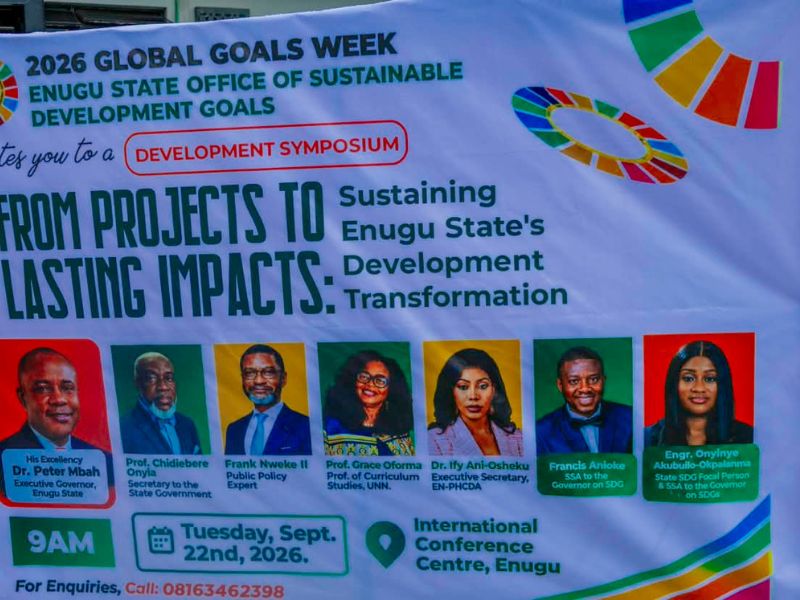
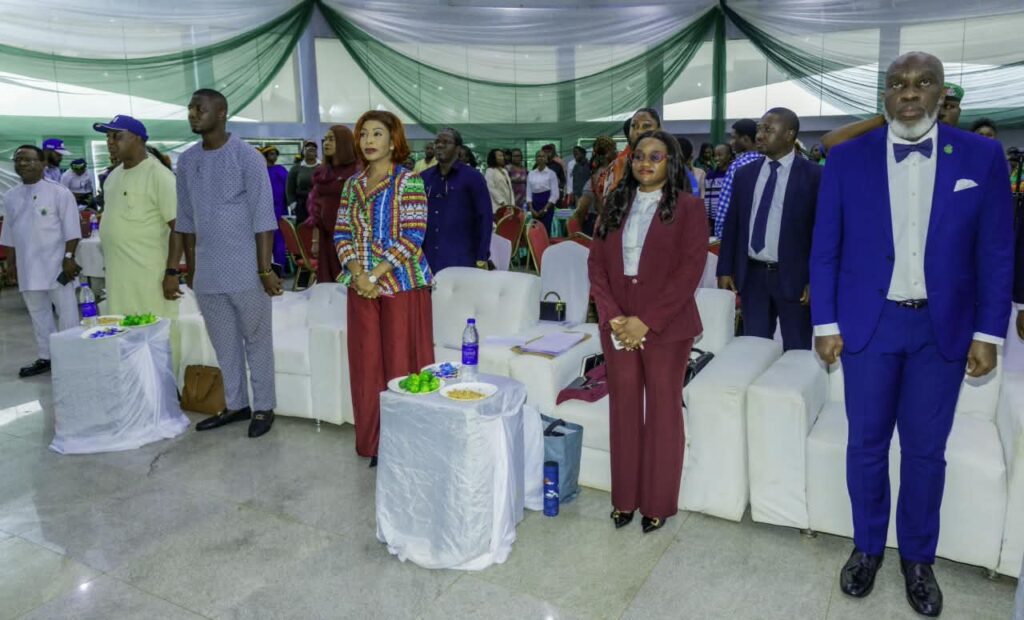
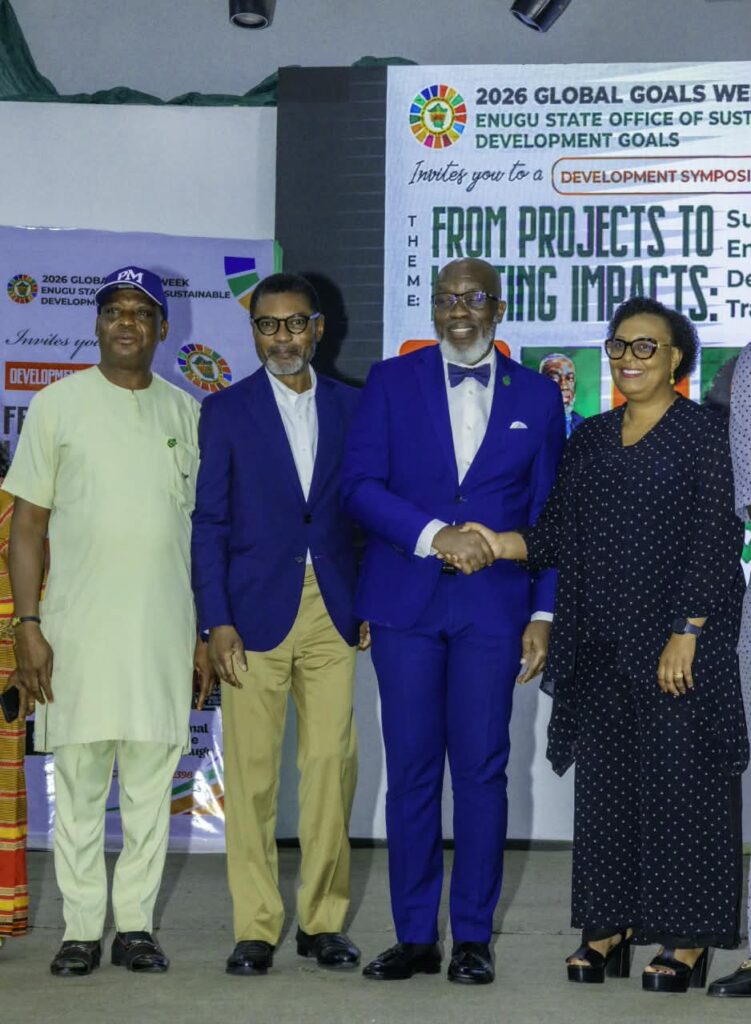
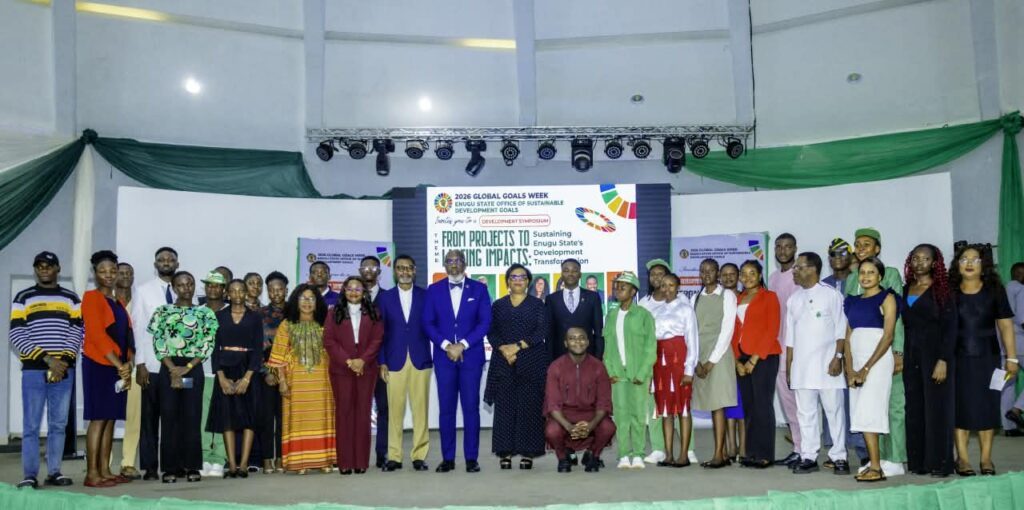
Governor Peter Mbah stated this on Tuesday at the 2026 Enugu State Global Goals Week Symposium, held at the International Conference Centre in Enugu. The event focused on the theme, “From Projects to Lasting Impact: Sustaining Enugu State’s Development Transformation.”
Represented by the Secretary to the State Government, Prof. Chidiebere Onyia, Mbah said the administration’s development agenda prioritises a sustainable and inclusive future. He added that government programmes align with the Sustainable Development Goals (SDGs).
The governor said the objective extends beyond completing projects to building systems that can support long-term development. He also highlighted investments in education, healthcare, roads, agriculture, water, technology and security.
The government’s development priorities include Enugu’s economic growth ambitions and efforts to improve infrastructure and public services across the state.
Mbah Highlights 25-Year Development Plan
Mbah said Enugu’s 25-year development plan would provide continuity and guide long-term investments. According to him, the plan is designed to ensure that development efforts continue beyond any single administration.
He said the state’s commitment to the SDGs could be seen in the distribution of development interventions across its 260 electoral wards. He particularly mentioned the Smart Green Schools and Primary Healthcare Centres.
The governor added that his administration would continue strengthening institutions, improving service delivery and protecting development gains already recorded. These priorities include education and healthcare initiatives, alongside wider infrastructure projects.
Related reports have covered the state’s Smart Green Schools and development programme and its community development activities.
Frank Nweke Calls for Greater Focus on Outcomes
In his keynote address, former Minister of Information Frank Nweke Jnr commended the scale of public investment in Enugu over the past three years. However, he said the government should now focus more closely on how projects affect residents.
Nweke listed interventions in roads, education, healthcare, water, transportation, agriculture, security, technology and tourism. He cited government-reported figures of more than 1,500 kilometres of roads constructed or reconstructed, over 7,000 classrooms and 260 Type-2 Primary Healthcare Centres.
Also, he referred to the 2025 state budget, saying ₦837.9 billion. Representing 86 per cent of the total budget, went to capital expenditure. He added that ₦320.6 billion was allocated to education.
“Ultimately, public expenditure must be judged by the public value it creates,” Nweke said.
He explained that the impact of a road should be assessed through its effect on mobility and economic activity. Schools and healthcare facilities, he added, should be measured by improvements in learning and health outcomes.
The discussion about public investment comes amid other development initiatives in the state.
Read this: the planned agro-mechanisation project and efforts to attract investment.
Nweke Says Development Should Be Measured by Impact
Nweke said the Smart Green Schools should be assessed through indicators such as enrolment, pupil retention, learning outcomes and teacher capacity. He stressed that measuring the number of schools built would not, on its own, establish whether education had improved.
He said healthcare investments should similarly be evaluated through access to quality services, maternal and child health outcomes, immunisation and reductions in preventable diseases and deaths.
On road infrastructure, Nweke urged the government to examine whether projects had reduced travel time and transport costs. He also called for assessments of access to markets and the extent to which roads stimulated economic activity.
The former minister warned that authorities should plan for infrastructure maintenance before facilities begin to deteriorate.
“Maintenance must therefore not begin when infrastructure starts failing; it should be part of the investment from the beginning,” he said.
He called for every major public asset to have a maintenance plan, a responsible institution, an expected life cycle and adequate funding for recurrent costs.
The emphasis on maintaining infrastructure follows wider development discussions in Enugu, including the state’s road and infrastructure programme and transport-related developments.
Former Minister Raises Revenue Sustainability
Nweke also discussed reforms in revenue and land administration. He said digital systems could reduce discretion, improve transparency and strengthen accountability.
He cited official figures showing that Enugu’s internally generated revenue rose from ₦26.8 billion in 2022 to ₦180.5 billion in 2024 and ₦406.7 billion in 2025. However, he said the composition and sustainability of the revenue growth also required examination.
According to Nweke, stronger domestic revenue mobilisation would help the state maintain its development ambitions. He said institutions must have the capacity to sustain projects after their initial implementation.
“Projects can transform places, but strong institutions are necessary to ensure that transformation endures,” he said.
Nweke outlined five priorities for sustaining Enugu’s development: linking major investments to clear problems and measurable outcomes; integrating the SDGs into planning and budgeting; measuring outcomes rather than expenditure alone; providing for maintenance from the outset; and strengthening institutions, professional capacity and accountability.
The revenue discussion also connects with the state’s broader economic plans, including Enugu’s $30 billion economic ambition and initiatives aimed at expanding employment opportunities.
SDGs Focal Person Calls for Inclusive Development
The Senior Special Assistant to the Governor on Sustainable Development Goals and Enugu State SDGs focal person, Onyinye Akubuilo-Okpalanma, said development must remain people-centred, inclusive and sustainable.
She said the success of government programmes should not depend solely on the number of completed projects or the amount of money spent. Instead, she urged authorities to assess how interventions improve residents’ lives and expand opportunities.
Akubuilo-Okpalanma called for greater attention to vulnerable groups, including children, women, persons with disabilities, rural communities and low-income households. She also encouraged residents to participate in planning, implementation and monitoring.
She said communities should serve as partners in development rather than merely receiving completed projects. Their feedback, she added, could help government identify priorities, reduce waste and sustain programmes.
Her remarks echoed calls for stronger community participation in development, including the state’s participatory rural appraisal exercise and grassroots development efforts across Enugu.
Calls for Stronger Education and Healthcare Systems
On education, Akubuilo-Okpalanma said Smart Green Schools require qualified teachers, appropriate learning materials, digital resources and safe learning environments. She also called for regular assessments of pupils’ performance.
She said the goal should be to equip young people with the knowledge and skills needed to contribute to Enugu’s economic and social development.
On healthcare, she urged sustained investment in primary healthcare, preventive medicine, maternal and child health, immunisation, health education and essential medicines. She stressed that functional facilities need trained personnel, reliable equipment, adequate funding and effective referral systems.
The SDGs focal person also called for attention to climate resilience, waste management, renewable energy, natural resource protection and green public infrastructure.
These priorities relate to the state’s primary healthcare development programme and wider efforts to improve public services. Enugu has also addressed health concerns, including the government’s statement that there was no confirmed diphtheria case in the state.
UNICEF Emphasises the Importance of Lasting Impact
UNICEF Field Officer in Enugu, Juliet Chiluwe, said sustainable development discussions should extend beyond infrastructure to examine the impact of government interventions. She also stressed the need to sustain the benefits of completed projects.
Chiluwe said UNICEF remained committed to partnering with the Enugu State Government and other stakeholders to strengthen systems that deliver services to children. She added that young people were central to preserving the state’s development gains.
Her comments highlighted the importance of partnerships and services that continue to benefit children and communities over time. Related initiatives include Enugu’s Smart Green Schools programme and youth-focused development efforts.
Stakeholders Endorse Sustainable Development
In separate goodwill messages, Special Adviser on Legislative Matters Rt. Hon. Paul Nnajiofor and Member 4 of the Enugu State Local Government Civil Service Commission, Amb. Amaka Nweke, commended the state’s development efforts.
They emphasised the need for inclusive, accountable and sustainable development that would benefit both present and future generations.
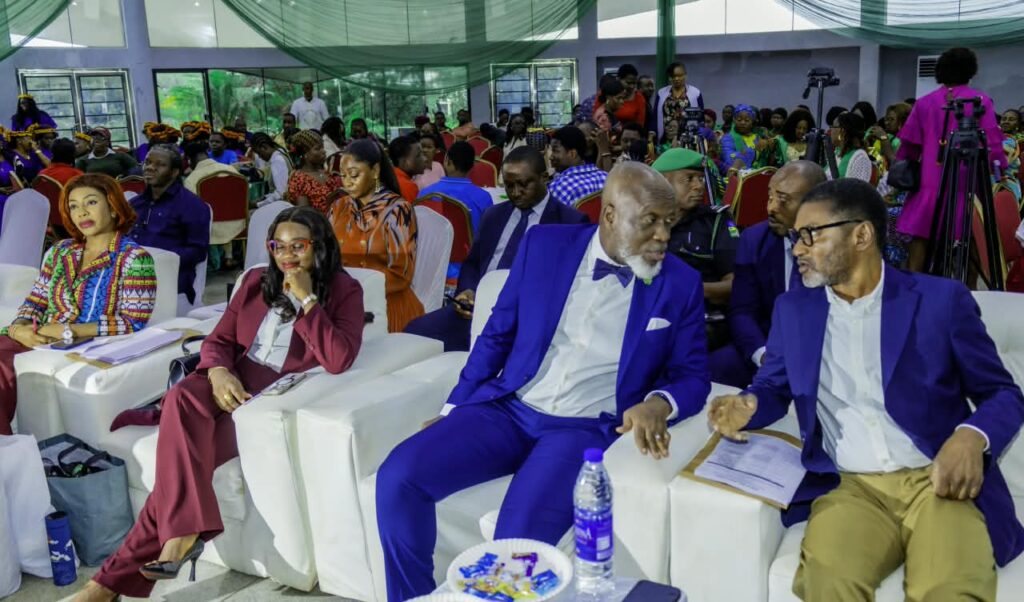
The symposium brought together government officials, development partners, traditional and community stakeholders, civil society representatives and members of the National Youth Service Corps.
The discussions centred on ensuring that public investments produce measurable results and that institutions can sustain those results over time. They also highlighted the importance of community participation, accountability and long-term planning.
Other related development stories include Enugu’s efforts to support rural communities and the state’s agro-mechanisation plans.