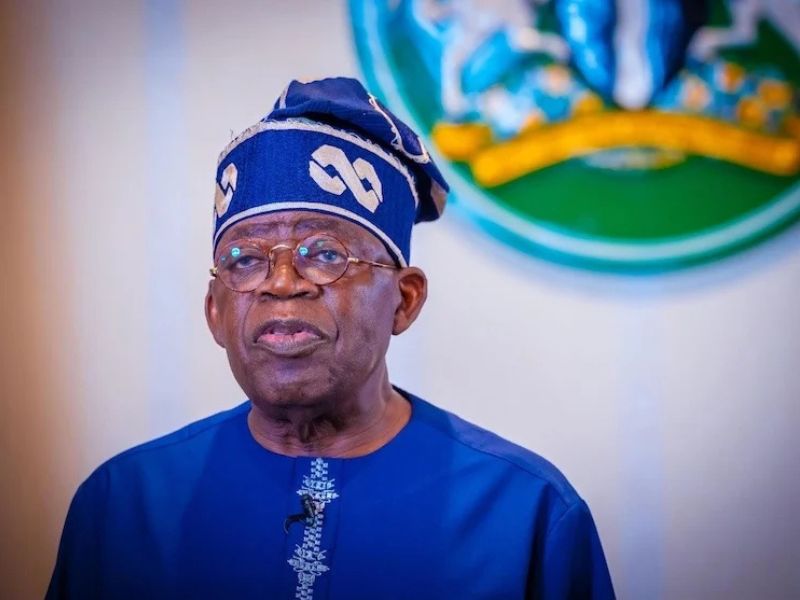
President Bola Tinubu has urged state governments to ensure that savings from cheaper energy are reflected in lower transportation fares from October 1.
Tinubu made the call on Saturday while providing an update on the National Affordable CNG Transit Programme. The programme followed his August 27 meeting with the governors of Nigeria’s 36 states.
The President said the federal and state governments had agreed that more Nigerians should begin to experience measurable reductions in transportation costs from October 1.
He urged state governments to work with transport unions and commercial operators to accelerate the conversion of vehicles to Compressed Natural Gas (CNG) and expand the deployment of alternative-energy buses.
The President also asked states to provide the infrastructure needed to support the programme.
According to Tinubu, the savings created by cheaper energy should ultimately reach commuters through reduced fares.
Tinubu Targets Lower Transport Fares
Tinubu said states must maintain the momentum ahead of the October 1 target.
He called on governments to collaborate with transport unions and commercial operators while supporting vehicle conversions and fleet deployment.
The President also stressed the need for infrastructure that would make CNG-powered transportation more accessible.
“Above all, ensure that savings from cheaper energy reach Nigerian citizens through lower fares,” Tinubu said in his statement.
The federal government has been expanding its CNG programme as part of efforts to provide alternatives to petrol and reduce transportation costs.
In March 2026, the Presidential Initiative on Compressed Natural Gas was expanded to include electric vehicles. The initiative was renamed the Presidential Initiative on Compressed Natural Gas and Electric Vehicles (PiCNG & EV).
The development means the programme now covers both CNG-powered vehicles and electric mobility infrastructure.
States Already Recording Fare Reductions
Tinubu said some states were already recording reductions in transportation fares through CNG-powered and electric buses.
He cited Borno as one example, saying CNG-powered and electric public transport services were carrying commuters for between ₦50 and ₦100 on routes where commercial operators charge between ₦300 and ₦600.
He also cited Kaduna, where 100 CNG-powered buses have provided free transportation on major routes.
According to Tinubu, the Kaduna buses carried about 3.2 million passengers during their first year of operation. He said the service saved commuters more than ₦3.5 billion in transportation costs.
The figures were presented by the President as examples of how alternative-energy transportation could affect the cost of movement.
The federal government has previously said the CNG programme is intended to reduce the impact of fuel costs on public transportation.
A separate report on petrol prices in Abuja highlights the wider fuel-price pressures affecting transportation costs.
Oyo, Adamawa Record Fare Changes
The President also pointed to developments in Oyo State.
According to Tinubu, CNG buses deployed to Pacesetter Transport reduced the Lagos-Ibadan fare from about ₦8,000 to ₦3,200 during the initial deployment.
He also said alternative-energy transport services in Adamawa had reduced fares by as much as 50 per cent.
The President gave the Adamawa example as a reduction from ₦8,000 to ₦4,000.
Such figures, according to the federal government, demonstrate the potential effect of cheaper energy on transportation expenses.
However, the actual fares paid by commuters can vary depending on routes, operators and prevailing transport conditions.
The government’s October 1 target is therefore focused on expanding existing interventions and encouraging more states to implement similar measures.
The administration has also continued to promote CNG conversion as an alternative to petrol-powered transportation.
Enugu-Nsukka Fare Falls to ₦1,500
Enugu State was also listed among the states where CNG-powered buses have already affected transport fares.
Tinubu said 100 CNG buses deployed in the state had reduced the Enugu-Nsukka fare from ₦2,500 to ₦1,500.
The reduction represents a ₦1,000 difference from the fare cited by the President before the CNG buses were deployed.
The Enugu development comes amid broader efforts to improve transportation and infrastructure across the state.
The state has also been involved in other development initiatives, including community-based interventions. A recent report detailed CSDA’s grassroots development activities in Enugu communities.
Tinubu said the examples from Enugu and other states showed that cheaper energy could translate into lower fares when governments and transport operators worked together.
He urged other states to accelerate their own programmes ahead of October 1.
Plateau, Abuja Also Record Savings
In Plateau State, Tinubu said government-supported buses were carrying about 13,000 commuters every day.
He said passengers were paying ₦200 on the supported buses, compared with more than ₦500 on commercial services.
The President also highlighted CNG-converted commercial vehicles operating on several Abuja routes.
The programme involves a partnership with the National Union of Road Transport Workers.
According to Tinubu, passengers on the affected routes are receiving a 40 per cent reduction in fares.
He gave several examples of the reported reductions.
The Area 1-Gwagwalada fare, he said, dropped from ₦1,500 to ₦900. The Nyanya fare fell from ₦700 to ₦420, while Wuse dropped from ₦400 to ₦240.
The reported reductions are part of the examples the President used to support his call for wider implementation.
The government has also been pursuing digital and infrastructure projects that are changing how services are delivered. NNPC recently launched a smart self-service filling station in Abuja.
Niger and Abia Join CNG Expansion
Tinubu also mentioned developments in Niger State.
According to the President, passengers using the Suleja-Abuja service were paying ₦550, compared with about ₦800 previously.
He also said Abia State had deployed 40 electric buses.
The fares on the Abia buses, he said, were being subsidised by 50 per cent.
The President described these interventions as evidence that commuters were already experiencing savings from alternative-energy transport.
“These are not projections. Nigerians are already experiencing these savings,” he said.
The federal government wants more states to implement similar programmes before the October 1 target date.
The programme covers both CNG-powered transportation and electric mobility, reflecting the government’s broader alternative-energy strategy.
The administration’s wider economic programme has also included efforts to increase investment and reduce operating costs. RMAFC has been seeking Chinese investment to boost Nigeria’s oil and gas revenue.
Over 120,000 Vehicles Converted to CNG
Tinubu said Nigeria had made significant progress in building its CNG transportation infrastructure over the past three years.
According to him, more than 120,000 vehicles have been converted to CNG.
He also said the country now has more than 400 certified conversion centres.
In addition, Tinubu said Nigeria has more than 90 CNG refuelling stations, with the numbers increasing.
The government considers the expansion of conversion centres important because vehicle owners need accessible facilities to switch from petrol to CNG.
Refuelling infrastructure is equally important because converted vehicles require reliable access to CNG.
The federal government has said it will continue supporting the expansion of the infrastructure.
Tinubu also said the government would increase conversion capacity and create opportunities for transport operators, manufacturers and private investors to participate.
The push for alternative energy comes as fuel prices continue to influence transportation and other household expenses.
Edo, Kano and Lagos Expand CNG Services
The President also listed several states where CNG transportation is being expanded.
He said Edo State already had 50 CNG buses in active service.
In Kano, more than 1,000 commercial vehicles had reportedly been converted, alongside expansion of conversion and refuelling facilities.
Tinubu also said Delta, Kwara and Lagos were expanding CNG-supported transportation services.
Akwa Ibom, according to the President, had taken delivery of 50 CNG buses ahead of their commercial operations.
The different approaches show that states are implementing alternative-energy transportation at different stages.
Some have focused on converting existing commercial vehicles, while others have deployed buses for public transportation.
The federal government is encouraging states to build on these efforts before October 1.
The programme also involves transport unions and commercial operators, who play a direct role in determining fares paid by commuters.
Tinubu Rules Out Return to Petrol Subsidy
Tinubu said the current global energy situation was putting additional pressure on petrol and diesel prices.
He argued that Nigeria’s dependence on imported petrol exposes the country and commuters to international energy-market changes.
The President said Nigeria’s gas resources could provide an alternative.
He also rejected calls for a return to the former petrol subsidy regime.
According to Tinubu, the government should instead accelerate the development of cheaper domestic energy alternatives.
The federal government has previously linked its CNG policy to the removal of petrol subsidies and the need to reduce transportation costs.
The administration has maintained that expanding CNG and electric transportation can reduce dependence on petrol.
Critics of the government’s economic policies, however, have continued to raise concerns about the broader effect of fuel prices on household expenses. A recent report carried criticism from the ADC over rising fuel and food costs.
Federal Government to Support States
Tinubu said the Federal Government would continue supporting states as they expand their transportation programmes.
The support will include CNG infrastructure and vehicle conversion capacity.
The government also plans to create an environment that allows transport operators, manufacturers and private investors to participate in the sector.
The President urged states to work closely with transport unions and commercial operators.
He also called for quicker deployment of converted vehicles and alternative-energy buses.
The success of the October 1 target will depend on how quickly these measures are implemented across different states.
It will also depend on whether savings from cheaper energy are reflected in the fares charged to commuters.
October 1 Target for Lower Fares
Tinubu’s latest statement places October 1 as the next major target for the National Affordable CNG Transit Programme.
The President wants more Nigerians to begin seeing measurable reductions in transportation costs from that date.
Several states already have CNG buses, electric buses or converted commercial vehicles in operation.
The government is now seeking to expand those interventions and ensure that the resulting savings reach passengers.
For commuters, the key issue will be whether lower operating costs translate into lower fares on the routes they use daily.
The examples cited by Tinubu show that some routes have already recorded reductions.
However, the extent of the reductions varies from state to state and route to route.
The Federal Government is encouraging governors to accelerate implementation before the October deadline.
CNG Programme Enters Next Phase
The National Affordable CNG Transit Programme is now moving toward a broader implementation phase.
Tinubu’s latest update indicates that the Federal Government wants states to move beyond pilot programmes and expand access to cheaper transportation.
The government has pointed to existing fare reductions in Borno, Kaduna, Oyo, Adamawa, Enugu, Plateau, Abuja, Niger and Abia.
It has also highlighted ongoing CNG expansion in Edo, Kano, Delta, Kwara, Lagos and Akwa Ibom.
The reported figures provide examples of what the programme has delivered so far, according to the President.
The next challenge is ensuring that more commuters benefit from similar reductions.
State governments, transport unions and commercial operators are expected to play major roles in that process.
The President has therefore urged states to maintain the momentum and complete the necessary preparations before October 1.
For Nigerian commuters, October 1 will provide a key point for assessing whether the expansion of CNG and electric transportation translates into broader reductions in fares.