
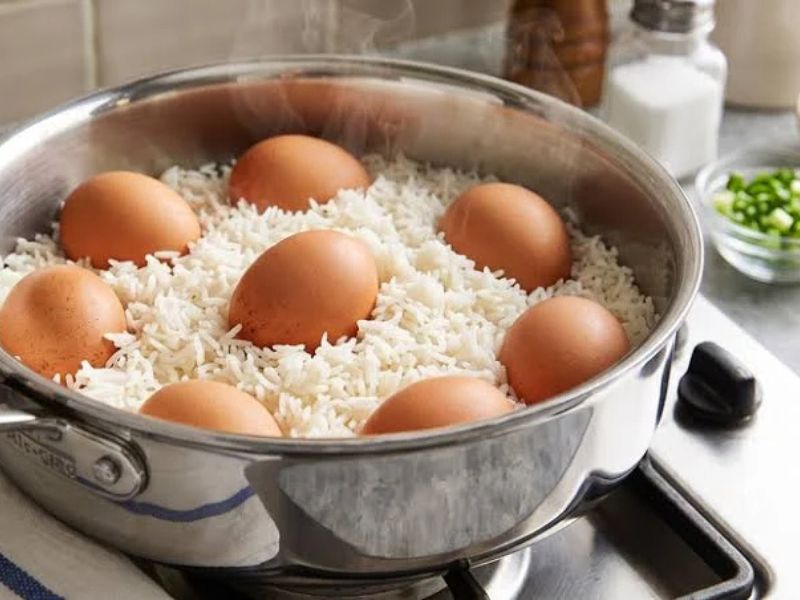
Experts have warned Nigerians against boiling eggs in the same pot with rice.They said the practice could increase the risk of cross-contamination during cooking. The warning comes as some households combine both foods to save cooking time and reduce gas consumption.
Food safety expert Oloyede said cracked eggs could affect the rice during cooking. He explained that egg contents could alter the taste, appearance and odour of the food.
Some Nigerians have adopted the practice because of rising cooking gas costs. However, experts said saving gas should not take priority over food safety.
Experts Warn Against Boiling Eggs and Rice Together
Oloyede explained that some people place eggs inside rice while it cooks. Others reportedly tie the eggs in nylon before putting them into the pot.
He said some people use the method because cooking both foods together can reduce cooking time. It may also help households use less cooking gas during meal preparation.
However, Oloyede maintained that boiling eggs and rice separately remains the safest option. He said the additional cooking time or gas cost is not worth the potential health risks.
The warning highlights wider concerns about food safety and household nutrition in Nigeria. It also comes as experts continue to encourage safer food preparation practices.
For more health-related coverage, readers can also see Enugu Has No Confirmed Diphtheria Case, Health Commissioner Says.
Cracked Eggs Could Contaminate Rice
According to Oloyede, a cracked egg could release its contents into the rice during cooking. He said this could change the food’s taste, appearance and smell.
He also warned that the issue goes beyond changes to the quality of the meal. Contaminants on the eggshell could potentially enter the rice through contact.
For that reason, he advised households to avoid putting eggs directly into rice while it cooks. He said separating the cooking processes offers a safer approach.
Food preparation is particularly important when meals are prepared for children and other vulnerable people. Families should therefore pay attention to hygiene at every stage of cooking.
Nutrition and food choices also remain important to public health. Readers can learn more from Emeritus Professor Calls for Home-Made Nutritional Foods to Tackle Child Malnutrition in Nigeria.
Eggshells May Carry Harmful Contaminants
Registered dietician-nutritionist Charles Oguikpe also warned against boiling eggs in the same pot as rice.
Oguikpe said contaminants on eggshells could be transferred to rice during cooking. He identified Salmonella and E. coli as examples of bacteria that may cause illness.
He explained that eggs can come into contact with poultry droppings before reaching consumers. This means the outside of an eggshell may carry contaminants.
Oguikpe added that washing eggshells does not guarantee that all contaminants have been removed. He therefore advised consumers to avoid practices that could transfer contaminants to ready-to-eat food.
The concern is especially important when food is prepared in large quantities. Proper separation of raw food from cooked food can help reduce the risk of contamination.
Cross-Contamination Can Cause Illness
Oguikpe described the transfer of contaminants from eggshells to rice as cross-contamination. He warned that the resulting infection could cause several symptoms.
These symptoms may include stomach cramps, diarrhoea and fever. In severe cases, he said the infection could lead to kidney complications.
Salmonella infections can occur when people consume food contaminated with the bacteria. Proper food handling and cooking are therefore important steps in reducing exposure.
The experts said Nigerians should not focus only on saving cooking gas. They should also consider the potential consequences of foodborne infections.
Health problems can create additional costs for households. They can also lead to missed work and reduced productivity.
Food Safety Should Come Before Saving Gas
Oloyede said food safety should remain the priority when preparing meals. He argued that the cost of treating a foodborne infection could outweigh the money saved on cooking gas.
He also pointed to the time people may lose when seeking medical treatment. For workers who earn daily wages, illness could mean losing income while paying medical expenses.
This makes safe food preparation important beyond the kitchen. A simple cooking shortcut could have consequences if it results in food contamination.
The warning also comes amid wider concerns about household expenses in Nigeria. Rising costs have pushed many families to seek ways to reduce daily spending.
However, experts say food safety should not be sacrificed in the process.
For another report involving health concerns in Nigeria, see LASUTH Doctors Begin Indefinite Strike Over Unpaid Allowances.
Why Washing Eggs May Not Be Enough
Oguikpe said contaminants on eggshells can originate from poultry droppings. He explained that this contamination can occur before the eggs reach consumers.
He further cautioned that washing the shells may not completely remove the risk. Consumers may therefore still face contamination if eggs are cooked directly with other food.
This is why he recommended separating eggs from rice during cooking. After boiling, the shells should be removed before the eggs are eaten.
The advice follows a basic food safety principle. Raw or potentially contaminated food should be handled carefully to prevent contact with other foods.
Proper kitchen hygiene also includes washing hands and utensils after handling food. These practices can help reduce the movement of harmful contaminants.
Experts Recommend Cooking Eggs and Rice Separately
Both experts advised Nigerians to cook eggs and rice separately.
Oguikpe said eggs should be boiled in a separate pot. Once they are properly cooked, the shells can be removed before consumption.
Rice should also be prepared separately and handled with clean utensils. This reduces the opportunity for contaminants on eggshells to come into contact with the rice.
The recommendation may require households to spend slightly more time or cooking fuel. However, the experts said food safety should take precedence over those considerations.
Families can still reduce cooking costs through other safe methods. Planning meals, using appropriate cookware and avoiding unnecessary cooking time can help.
Consumers should also follow safe storage practices after meals are prepared. Cooked foods should not be left exposed for extended periods.
Food Safety Remains Important for Nigerian Households
The warning about eggs and rice highlights the importance of everyday food safety. Small changes in cooking habits can help reduce the risk of foodborne illness.
Experts say households should understand how contamination can move from raw food to cooked meals. This is particularly important when foods are prepared together in one pot.
Nigerians are also encouraged to pay attention to the condition of food before cooking. Damaged eggs, contaminated surfaces and poor kitchen hygiene can increase food safety concerns.
At the same time, consumers should avoid unnecessary food waste. Safe cooking and storage methods can help households protect both their health and food supplies.
Food and nutrition remain important parts of public health. This is also relevant to concerns about childhood nutrition and access to healthy meals.
For more coverage on nutrition and community development, read CSDA Takes Community Sensitisation, PRA Exercise to Six Enugu Communities.
What Nigerians Should Do When Cooking Eggs and Rice
Experts recommend using separate pots when preparing eggs and rice. This prevents the eggshells from coming into direct contact with the rice.
Consumers should also handle eggs carefully before cooking. They should keep food preparation surfaces clean and wash their hands after handling potentially contaminated items.
After boiling the eggs, the shells should be removed before eating. Rice should also be served using clean utensils and stored properly after cooking.
These steps can help reduce the possibility of cross-contamination. They can also protect households from avoidable foodborne illnesses.
While rising cooking costs remain a concern, experts say food safety should come first. The potential cost of treating an infection may outweigh the small savings achieved by cooking both foods together.
The advice is therefore straightforward: Nigerians should cook eggs and rice separately whenever possible. Safe preparation can help protect families while reducing the risks associated with food contamination.