
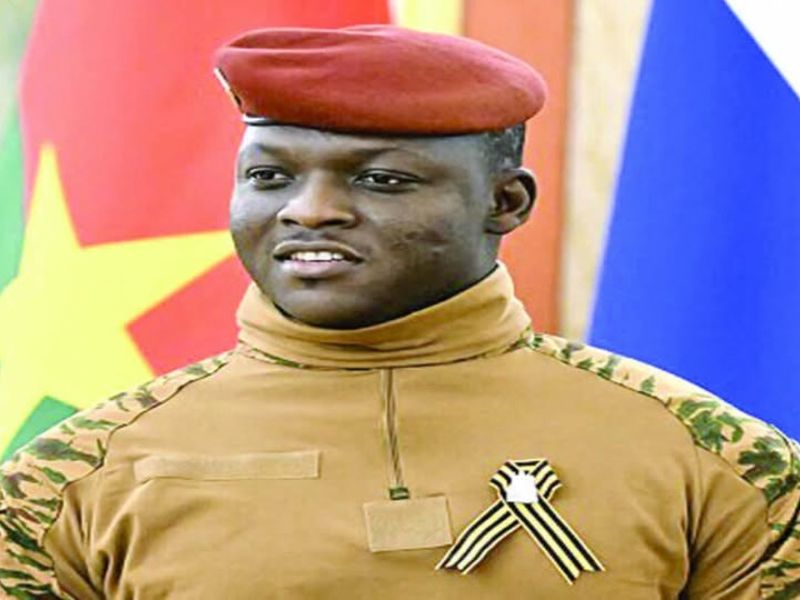
Burkina Faso has opened its first gold refinery as the country moves to process more of its mineral wealth locally. President Ibrahim Traoré inaugurated the National Gold Refinery of Burkina Faso, known as RAFFINOR-BF, in Ouagadougou on Monday, September 28, 2026.
The refinery represents a major step in the government’s plan to expand domestic processing and retain more value from the country’s gold resources.
Burkina Faso is one of Africa’s leading gold producers. The country produced about 94 tonnes of gold in the previous year, according to figures cited in current reports.
However, the gold sector has faced challenges linked to informal mining, smuggling and insecurity.
Burkina Faso Opens First Gold Refinery
The Burkina Faso gold refinery was built to process gold within the country rather than sending raw material abroad for further refining.
The government says the facility will help strengthen control over the gold value chain. It will also support local processing, certification and storage of the precious metal.
RAFFINOR-BF covers about five hectares in Ouagadougou. The facility includes a foundry, analysis laboratory, gold storage area, jewellery unit and administrative buildings.
The refinery uses automated equipment designed for the processing of gold into high-purity bars.The Burkina Faso government says the facility can refine up to 164 tonnes of gold annually during its first phase. A second phase is expected to increase the refinery’s theoretical capacity to 515 tonnes per year.
Refinery Cost 11 Billion CFA Francs
The Burkina Faso gold refinery cost more than 11 billion CFA francs to build. That figure is equivalent to about $19 million based on the exchange rate cited in reports about the project.
The government financed the project mainly through the Société Nationale des Substances Précieuses, or SONASP. Domestic private-sector partners also participated in financing the refinery.
Officials say the project was designed to strengthen the country’s control over its mineral resources. The refinery had been under construction since 2023 before its inauguration this week.
Traoré Wants Gold Value Chain Kept in Burkina Faso
President Ibrahim Traoré said the country should move beyond exporting raw minerals. He said Burkina Faso wants to refine its metals locally and develop more stages of the value chain within the country.
The government has presented the refinery as part of its wider economic sovereignty agenda. That agenda focuses on increasing domestic control over natural resources and expanding local industrial processing. Traoré’s administration has also pursued greater state involvement in the mining industry.
The government has nationalised several mining assets while seeking to increase domestic participation in the sector. The latest development comes as Burkina Faso continues efforts to expand industrial activity beyond traditional raw-material exports.
Government Targets Informal Gold Mining
Burkina Faso has also been trying to bring its informal gold sector under greater control. Authorities suspended exports of gold from informal mining operations in 2024.
Officials said the measure was intended to improve organisation and oversight of the sector. The government has also raised concerns about gold leaving the country through unofficial channels.
Traoré previously linked the alleged illegal movement of gold to the financing of terrorism. The issue is particularly significant because Burkina Faso continues to face attacks from jihadist groups.
Gold Mining Faces Security Challenges
Security remains a major challenge for Burkina Faso’s mining industry. Jihadist groups operate in parts of the country and have carried out repeated attacks.
The insecurity has affected communities and economic activities in several areas.
It has also complicated efforts to regulate artisanal and informal mining operations. Gold remains an important source of revenue for Burkina Faso despite these challenges.
The government hopes stronger oversight and domestic processing can improve the benefits the country receives from its mineral resources. The situation also highlights wider concerns surrounding mining and security across the region.
Refinery Could Strengthen Local Processing
RAFFINOR-BF is expected to process gold into refined bars rather than leaving the country with raw or semi-processed material. The government says this could help retain more value from gold production within Burkina Faso.
Local processing can also support activities such as testing, certification, secure storage and jewellery production. The refinery’s laboratory and other facilities are designed to support several stages of the gold-processing chain.
The government has described the project as part of its attempt to build a more integrated mining industry. The move comes as several African countries explore ways to increase local value from their mineral resources.
Burkina Faso Seeks Greater Economic Independence
The refinery forms part of a broader economic strategy under Traoré’s government. Officials say the country wants to use its natural resources to support industrial development, employment and public revenue.
The administration has promoted policies aimed at reducing reliance on foreign processing and increasing domestic production. Those policies have also extended to sectors including cotton, agriculture and textiles.
The gold refinery therefore represents more than a mining project for the government. It has been presented as part of a wider effort to increase domestic control over Burkina Faso’s economy.
Burkina Faso Gold Refinery Has 515-Tonne Long-Term Target
The refinery’s first phase has a theoretical annual capacity of 164 tonnes. Authorities plan to expand that capacity to 515 tonnes during a second phase.
The planned expansion would give Burkina Faso significant additional processing capacity. The initial capacity is already higher than the country’s reported gold production of about 94 tonnes in the previous year.
This means the facility could potentially process gold from different sources as the government works to formalise the sector. Officials also want the refinery to help strengthen Burkina Faso’s position within the regional gold industry.
Gold Remains Important to Burkina Faso’s Economy
Gold is one of Burkina Faso’s most important natural resources. The country has developed a large mining sector, with both industrial and artisanal operations contributing to production.
However, informal mining has created regulatory and security challenges for authorities. The new refinery could give the government greater oversight of gold entering the formal processing chain.
It could also provide a central facility for testing, refining and storing gold produced within the country.
Meanwhile, debates about the management of mineral wealth continue across Africa. Nigeria, for example, has also faced concerns surrounding artisanal mining and the management of its mineral resources.
Recent reports about deaths involving suspected miners in Niger State have renewed attention on the risks facing informal mining communities.
For related coverage, readers can follow reports on Niger Miners’ Deaths: Survivors Recount Suffocation Inside NSCDC Custody and Niger Miners’ Deaths: Artisanal Mining President Demands Thorough Investigation.
New Refinery Marks New Phase for Burkina Faso Gold
The opening of RAFFINOR-BF marks a new phase in Burkina Faso’s gold industry. The government wants more of the country’s gold to be processed, certified and stored locally.
The facility’s 164-tonne initial capacity gives the country a significant new processing platform.
Authorities also plan to expand the refinery to 515 tonnes annually in the future. The project reflects Traoré’s stated objective of moving Burkina Faso away from simply exporting raw resources.
Whether the refinery achieves its wider economic goals will depend on production, regulation, security and the government’s ability to formalise the gold sector.
For now, the inauguration gives Burkina Faso its first national gold refinery and adds a major processing facility to its mining industry.