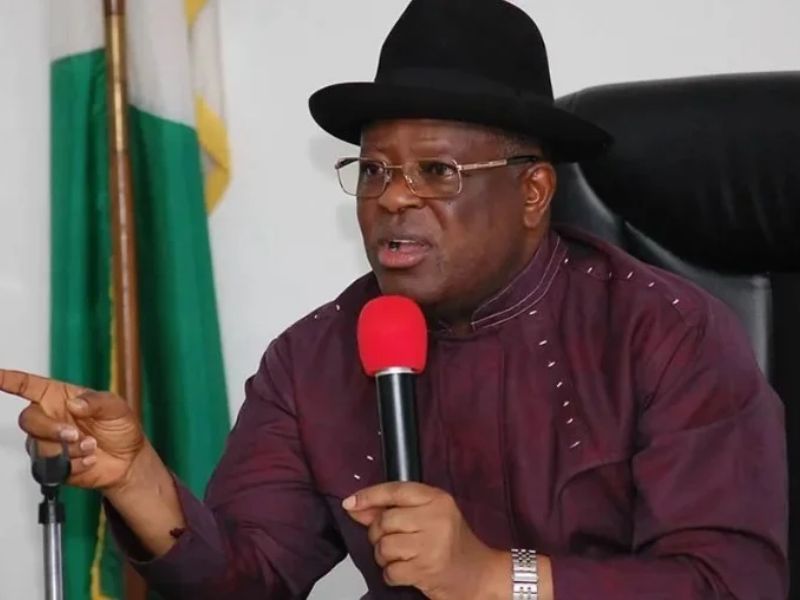
Minister of Works David Umahi has said Peter Obi cannot be considered the South-East’s best presidential candidate. He made the remarks while defending political leaders from the region who support President Bola Tinubu ahead of the 2027 election.
Umahi spoke during a Friday interview with ARISE News. He argued that Obi failed to consult political leaders in the South-East before contesting the 2023 presidential election.
“Peter Obi is not the best of our finest in South East. He’s not the best, he can never be the best,” Umahi said.
His comments come amid growing political discussions about the South-East’s prospects in the 2027 presidential election. They also reflect disagreements over whether supporting Tinubu amounts to abandoning the region’s political interests. Read more about the debate surrounding Obi and Kwankwaso’s roles in the 2027 presidential race.
Umahi Says Obi Failed to Consult South-East Leaders
The former Ebonyi State governor said presidential aspirants from the South-East should consult governors and other influential stakeholders before pursuing the presidency.
According to Umahi, a candidate seeking to represent the region must engage its political leaders. He argued that such an ambition should not proceed without discussions with people who have played significant roles in the region’s politics.
“You cannot play politics in South East without consulting people like us,” he said.
Umahi added that he would have consulted political leaders across the region if he had sought the presidency. He maintained that presidential ambitions should involve wider discussions when they carry the expectations of an entire region.
“If I were contesting, I would have consulted,” he said.
The minister’s position highlights the importance he places on political consultation and alliances. Similar discussions have featured in debates over political cooperation ahead of 2027, including Wike’s defence of his support for Tinubu.
Umahi Rejects Anambra’s Claim to South-East Presidency
Umahi also questioned the suggestion that Anambra State should automatically produce Nigeria’s president if the South-East secures the opportunity.
He recalled that Nigeria’s first President, Nnamdi Azikiwe, came from the area that now constitutes Anambra State. However, he argued that other states in the South-East should also receive consideration.
Umahi specifically mentioned Ebonyi, Enugu, Abia and Imo as states whose political leaders could aspire to the presidency.
His comments suggest that he does not consider Obi the region’s only viable presidential option. He also challenged the idea that the South-East must automatically rally behind one candidate because of the candidate’s performance in the previous election.
The question of political representation continues to feature in discussions about the next presidential contest. Meanwhile, Tinubu’s political coordination efforts involving Wike offer another example of the alliances emerging ahead of 2027.
Umahi Defends South-East Leaders Supporting Tinubu
The minister also defended South-East politicians who have declared support for Tinubu rather than Obi.
He rejected criticism portraying these leaders as betraying the region because of their political choices. Instead, he argued that the South-East needed to negotiate and build alliances with other parts of Nigeria.
Umahi maintained that the region’s presidential ambition should not depend on supporting one particular politician. He said political leaders should consider broader alliances when pursuing the presidency.
His comments come as supporters of Tinubu continue to encourage voters to back the President for another term. For related coverage, read Remi Tinubu’s appeal for Nigerians to re-elect her husband.
The debate also reflects different approaches to political engagement ahead of the next election. Some political figures have continued to promote alternative presidential ambitions, including Sowore’s proposals ahead of the 2027 contest.
Umahi Says South-East Will Eventually Produce President
Umahi maintained that the South-East would eventually produce Nigeria’s president. However, he insisted that the region’s turn had not yet arrived.
“It is not yet our turn,” he said, reiterating his position on the timing of the region’s presidential ambition.
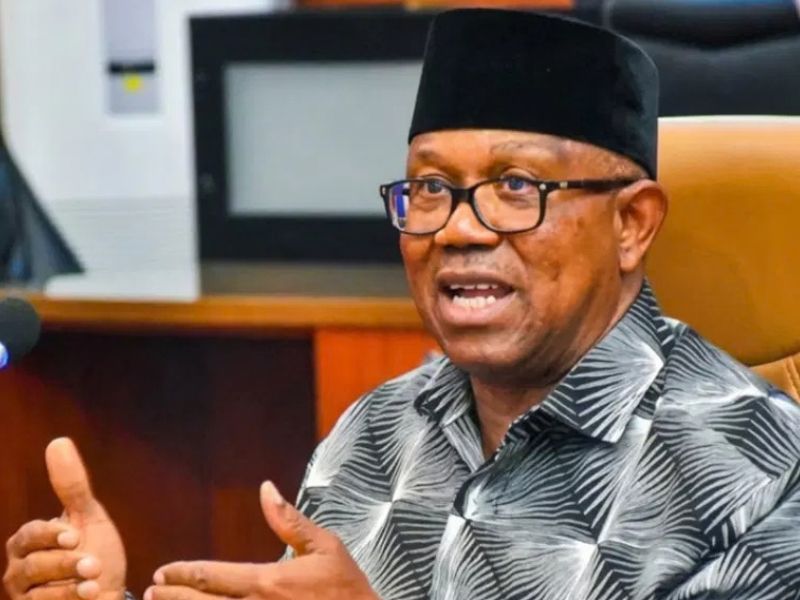
In September, PUNCH Online reported that Umahi had also challenged comparisons between himself and Obi. At the time, he said he could not identify an area in which the former Anambra governor was superior to him.
The latest comments add to the political exchanges surrounding Obi’s standing in the South-East. Obi remains a central figure in discussions about the region’s role in the 2027 election.
His activities have continued to attract attention across the country, including during his visit to Jos and Mangu to meet victims of attacks. His political profile has also featured in other public events, including reports of tension involving his convoy in Benue State.
Political Alliances Shape the 2027 Debate
Umahi’s remarks place political consultation and coalition-building at the centre of his argument about the South-East’s presidential prospects.
He believes leaders from the region should consider alliances beyond their immediate political base. He also maintains that supporting Tinubu does not automatically amount to betraying the South-East.
The debate is likely to remain part of political discussions as parties and their supporters prepare for 2027. Other conversations about governance and political participation include calls for greater engagement beyond social media and discussions about access to federal opportunities.
For now, Umahi has made his position clear: he does not regard Obi as the South-East’s best presidential candidate. He also believes the region must build broader political alliances before it can secure the presidency.