The Enugu State Internal Revenue Service (ESIRS) says Nigeria’s new tax laws protect low-income earners through exemptions and reliefs.
The agency’s Executive Chairman, Emmanuel Ekene Nnamani, said government should not impose taxes on people who cannot afford them.
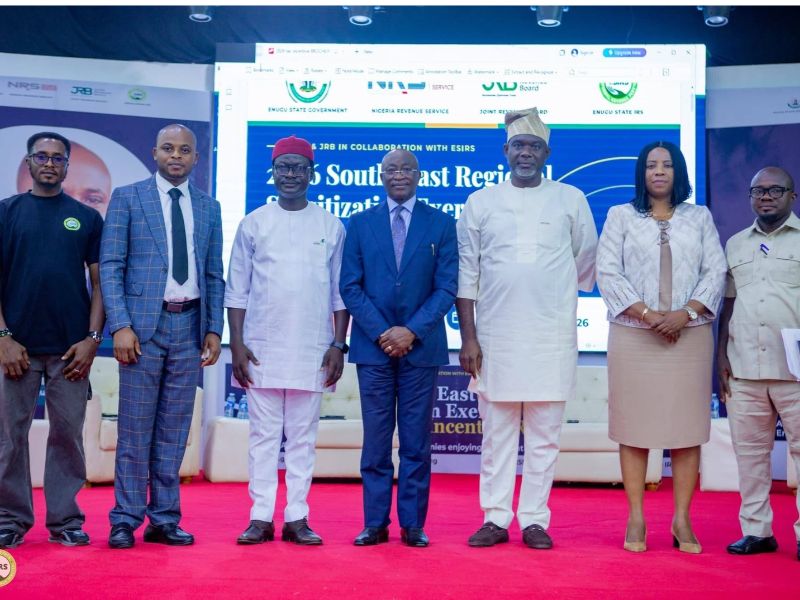
He spoke at the 2026 Southeast Regional Sensitisation Exercise on Annual Tax Incentive Returns. The Nigerian Revenue Service (NRS) and Joint Revenue Board (JRB) organised the event with ESIRS.
The exercise held at the International Conference Centre in Enugu. It brought together tax administrators and stakeholders from across the Southeast.
Nnamani explained that individuals earning below the annual taxable income threshold of ₦800,000 qualify for tax exemption. He also said small businesses in the informal sector with annual turnover below ₦12 million enjoy the exemption.
According to him, these provisions aim to reduce the financial burden on vulnerable individuals and small businesses.
“The tax law has actually removed tax from poor people. The low-income earners, those who are earning below taxable income of N800,000 a year, no longer pay tax,” he said.
He added that traders and other informal sector operators with annual turnover below ₦12 million no longer pay tax under the provisions discussed.
Nnamani Explains Annual Tax Incentive Returns

The ESIRS chairman also explained why taxpayers who benefit from exemptions must file annual tax incentive returns.
He described tax reliefs as government expenditure because they represent revenue the government chooses not to collect.
“But that you are not paying tax, it means government is paying you. That is the tax expenditure,” Nnamani said.
He explained that the reporting process would help government determine the actual value of incentives granted to individuals and businesses.
The information would also guide future policy decisions. Government could use the records to assess whether existing incentives should increase, decrease or remain unchanged.
Nnamani acknowledged that the filing process might initially face challenges. He attributed this to Nigeria’s weak tax culture and limited public understanding of tax laws.
He therefore called for stronger public sensitisation, manpower development and systems that could support the process.
The chairman also urged Nigerians to study the tax laws instead of relying on hearsay. He said taxpayers should understand the reliefs available to them and take advantage of applicable provisions.
The state has previously introduced measures to ease tax obligations for specific groups. For instance, Governor Peter Mbah announced a tax and levy holiday for commercial tricycle operators. Read how ESIRS explained the revised Keke daily e-ticket.
The government also scrapped daily ticket fees for Keke riders as part of its transport sector reforms. Read about the Keke riders’ response to the policy.
Enugu Government Highlights Tax Administration Reforms

Representing Governor Peter Mbah at the event, Commissioner for Finance, Hon. Dr Nathaniel E. Urama, highlighted efforts to simplify tax administration.
Urama said the state government prioritised easier tax payments for residents and improved processes for revenue officials after taking office in 2023.
He explained that one of the administration’s early decisions was to grant autonomy to ESIRS.
According to him, the move allows the agency to operate independently without interference from other government offices.
“When we took over office in 2023, what we did was to think of how to make tax payments seamless and easy for both the tax collectors and the taxpayers,” Urama said.
He added that the state introduced a performance-based incentive structure for revenue administrators. The arrangement links their earnings to the revenue they generate.
The government has also addressed concerns surrounding tax collection in the transport sector. In September, it denied reports that commercial bus drivers and tricycle operators protested over taxes and levies. Read the government’s explanation of the reported tax protest.
Meanwhile, the state has pursued wider reforms to strengthen revenue administration and improve transparency. A recent development symposium highlighted the need to sustain Enugu’s revenue growth through stronger institutions and digital systems. Read about calls for sustainable revenue mobilisation in Enugu.
Tax Incentive Returns and Documentation Requirements

Also speaking, Juliana Erimme, a senior manager in the Office of the Executive Chairman on Tax Incentive Management, explained the purpose of the sensitisation exercise.
She said the programme aimed to help taxpayers understand available incentives and their obligation to file annual returns.
Erimme referred to Section 27 of the Nigerian Tax Acts 2025, which provides for annual tax incentive returns.
She explained that some reliefs could reduce a taxpayer’s taxable income. Rent relief, she noted, provides one example.
However, she stressed that taxpayers must maintain proper records and supporting documents. These documents would help establish their eligibility for the deductions they claim.
Erimme said the annual returns would also help government measure the value of tax reliefs granted.
The records would enable authorities to assess whether existing incentives remain effective or require adjustments.
The state’s wider fiscal reforms have also featured in discussions about its development ambitions. These include revenue automation, improvements at ESIRS and changes to financial management systems. Read about Enugu’s fiscal reforms and development targets.
Ebonyi Representative Commends Regional Collaboration

A representative of the Ebonyi State Internal Revenue Service, Irem Sylvester Nwachukwu, described the sensitisation programme as impactful.
He said the lessons would help improve tax administration and voluntary compliance across the Southeast.
Nwachukwu added that the exercise would strengthen cooperation between revenue authorities and taxpayers.
He also said participating states could exchange ideas and adopt more effective approaches to public engagement.
According to him, Enugu’s experience could provide useful lessons for Ebonyi State as it works to improve revenue administration and expand its revenue base.
The regional exercise also provided an opportunity for tax administrators to discuss implementation challenges and share practical solutions.
Enugu Pursues Wider Economic and Investment Reforms
The discussions on tax incentives come as Enugu continues to pursue reforms aimed at strengthening its economy and attracting investment.
Governor Mbah has repeatedly linked improved revenue administration with the state’s ability to finance development projects.
The administration has also highlighted its efforts to create a business-friendly environment. These include infrastructure investments and partnerships with private-sector organisations.
Recently, Mbah commissioned a new bank branch in Enugu and highlighted the state’s investment drive. Read about the bank’s entry into Enugu.
The government has also outlined plans to expand the state’s economy through agriculture and industrial development. Read about the Federal Government and Enugu’s agro-industrialisation partnership.
In addition, the administration has pursued reforms to improve the business environment. One example is its proposed amendment to the state’s tenancy law, which seeks to address rent increases and tenancy-related charges. Read about Mbah’s proposed changes to the Enugu tenancy law.
Mbah has also defended federal economic reforms, including fuel subsidy removal. He argued that Nigeria should focus on using the resulting opportunities to create jobs and generate wealth. Read Mbah’s position on fuel subsidy removal.
The government has further pursued investment opportunities in agriculture, energy and technology. These initiatives form part of its ambition to expand Enugu’s economic base and attract private capital.
The regional sensitisation exercise ended with renewed calls for better public understanding of tax incentives. It also highlighted the need for cooperation between taxpayers and revenue authorities.
The organisers said the exercise would help individuals and businesses understand the incentives available under the new tax framework. It also addressed the annual reporting requirements for beneficiaries.