
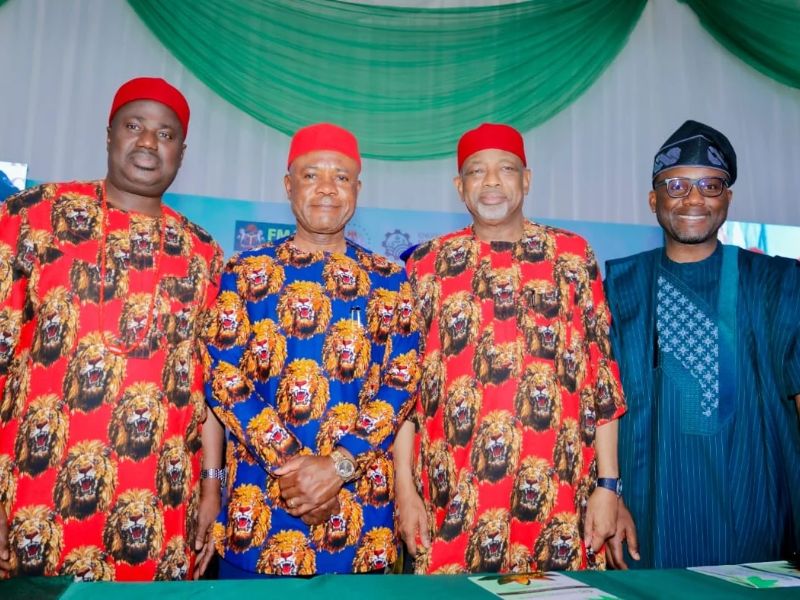
The Federal Government and Enugu State Government have reaffirmed their commitment to transforming agriculture into a commercially driven and agro-industrialised sector.
The governments said the move would boost food security, create jobs and stimulate economic growth.
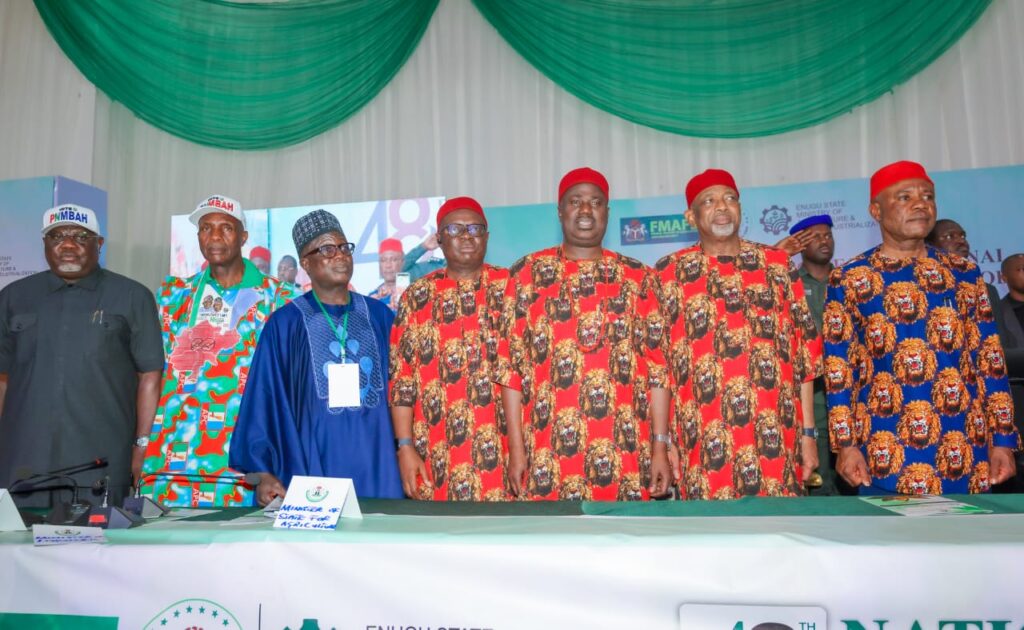
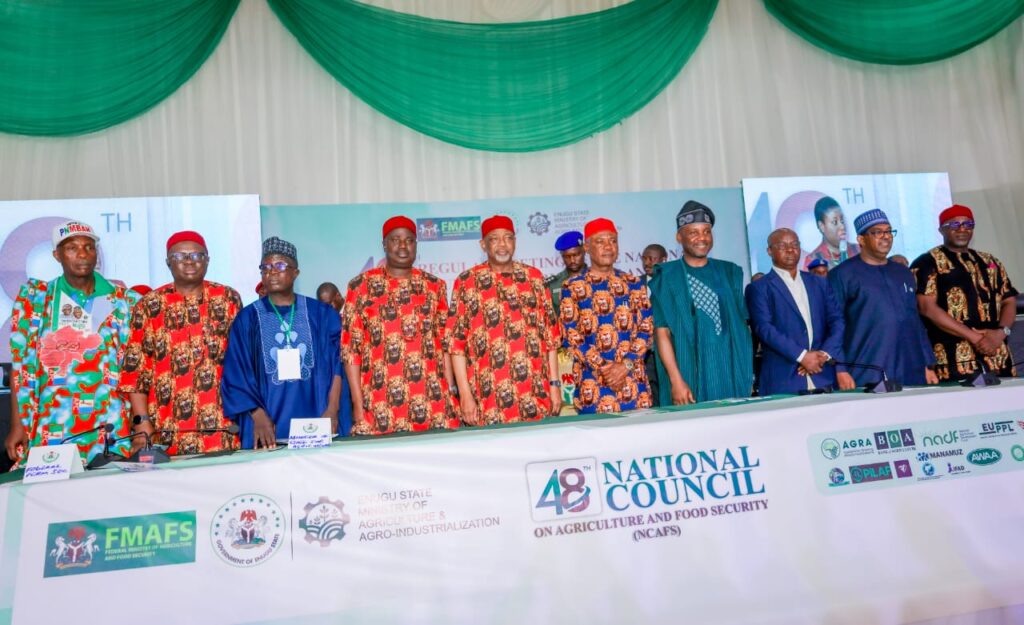
They restated their shared policy objective on Thursday at the 48th Regular Meeting of the National Council on Agriculture and Food Security. Enugu State hosted the meeting, where Governor Peter Mbah and the Minister of Agriculture and Food Security, Senator Abubakar Kyari, highlighted interventions to strengthen agricultural value chains.
The discussions focused on improving productivity and expanding market access. They also examined opportunities to connect agricultural production with processing industries and commercial markets.
The meeting took place at Hotel Presidential, Enugu, under the theme, “Enhancing Agricultural Value Chains, Agro-Industrialization and Market Access for Economic Growth.”
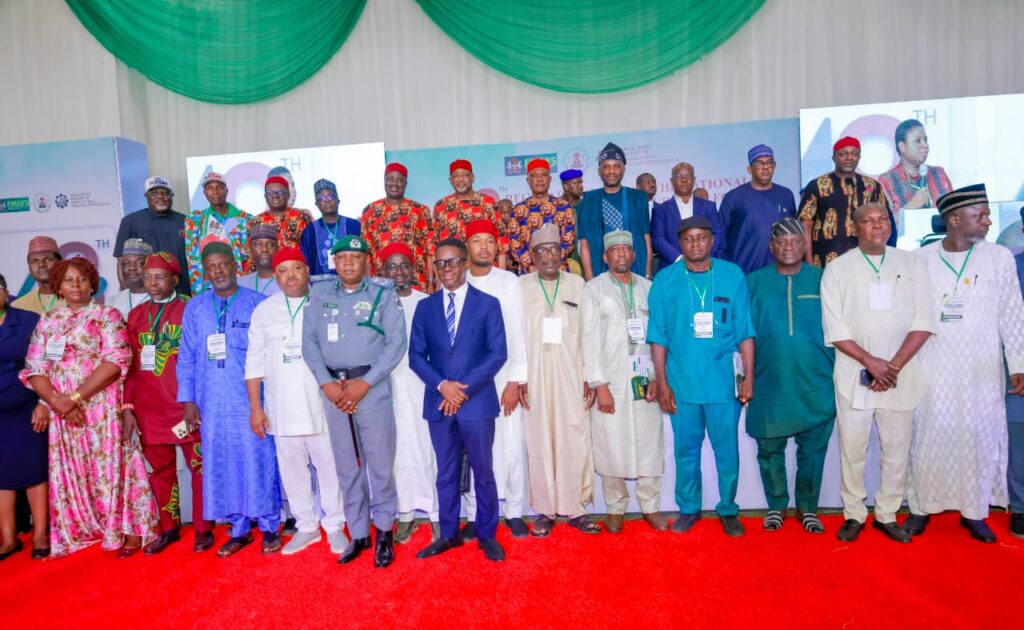
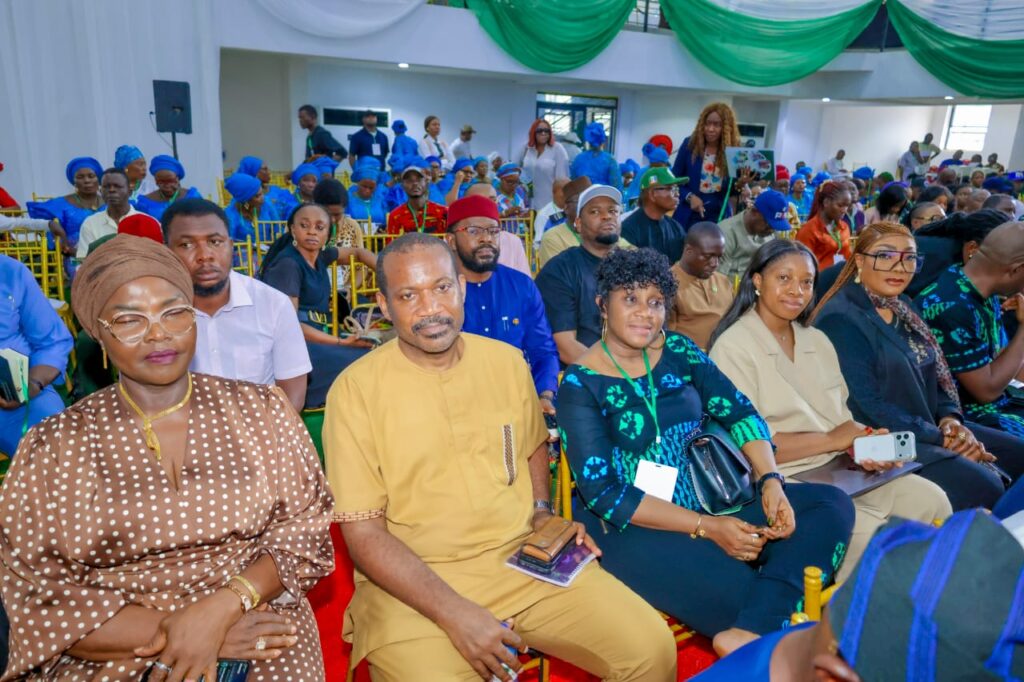
It attracted commissioners and delegates from the 36 states and the Federal Capital Territory. Development partners and other agricultural stakeholders also attended.
The meeting followed other regional agricultural initiatives, including the South-East Agro-Development Programme launched by Mbah and SEDC.
Addressing delegates, Governor Mbah said agricultural transformation required more than increased food production. He stressed the need to connect farmers with mechanisation, processing facilities, industries and viable domestic and international markets.
He said his administration’s ambition to grow Enugu’s economy from approximately $4.4 billion to $30 billion by 2031 informed its decision to position agriculture as a major economic driver.
“We want Enugu to become a place where agriculture supports industry, industry creates opportunities for farmers and entrepreneurs, and our products compete successfully in domestic and international markets,” he noted.
The governor disclosed that more than 60,000 farmers had benefited from agricultural support programmes. He added that the government had captured 84,000 farmers in a digital registry to improve intervention distribution.
Mbah also said his administration was addressing production challenges through the 260 Farm Estates Programme.
“We are working to establish organised agricultural production hubs across all 260 wards of Enugu State, creating opportunities for farmers, cooperatives, agribusinesses and young entrepreneurs to participate in larger, more productive agricultural enterprises.
“To support this, we have developed an Agricultural Land Bank, securing approximately 187,000 hectares through strategic partnerships with communities,” he stated.
The initiative aligns with the SEDC’s proposed 50,000-hectare agro-mechanisation project aimed at expanding agricultural production and employment across the South-East.
The governor also highlighted the assembly of 107 tractors through a partnership with Nortra Tractors. He said the machines would help farmers scale up production.
Mbah Highlights Enugu’s Agro-Industrialisation Projects
On agro-industrialisation, Mbah cited the expansion of the previously moribund Enugu United Palm Products Limited plantation to 6,917 hectares. He said the project had created more than 3,500 jobs.
The governor also highlighted the revival of Enugu Songhai Farms through a partnership with Tribu Limited. He described the facility as a 10,000-hectare agro-industrial hub.
He further cited the reactivation of Sunrise Flour Mills and the Integrated Livestock Development Centre at Ubahu. The livestock facility is designed to accommodate between 15,000 and 20,000 cattle.
These projects form part of the state’s wider efforts to revive dormant agricultural assets and expand commercial farming. The government has also outlined its plans to revive agricultural assets and strengthen food security in Enugu.
“These investments are connected by a common purpose: we want more of the value generated by our agricultural resources to remain within our economy,” he stated.
Mbah called for stronger collaboration among federal and state governments, development partners and private investors. He said agricultural transformation depended on coordinated investments in production, processing, infrastructure and market access.
“Enugu is open for agribusiness. We have fertile land, a strategic location connecting the South East with other parts of Nigeria, a young and enterprising population, and a government committed to supporting productive investment.
“We welcome partnerships with other states, federal institutions, development agencies and private enterprises that share our ambition,” he concluded.
The state is also pursuing international partnerships to attract investment into agriculture and related industries. One of its initiatives is the proposed Enugu-Germany Investment Corridor for agriculture, energy and technology.
Similarly, the NACCIMA’s backing of Enugu’s $30 billion economic ambition has highlighted the importance of investment and industrial development.
Kyari Highlights Federal Government’s Agricultural Interventions
In his remarks, Kyari said the Federal Government was implementing various interventions to improve agricultural productivity. He said the programmes would protect farmers’ incomes and strengthen food security.
He disclosed that the National Agricultural Development Fund’s Farm Input Support Programme had reached more than 115,000 beneficiaries across 25 states and the FCT.
The fund had also disbursed ₦16.27 billion through agribusiness financing facilities.
The minister added that the Bank of Agriculture had financed more than 500,000 smallholder farmers.
He further disclosed that the second phase of the Renewed Hope National Agricultural Mechanisation Programme would deliver an additional 1,500 tractors. The programme would also provide more than 8,000 complementary pieces of equipment.
Kyari stressed the importance of strengthening commodity supply chains. He said agricultural production must translate into dependable raw materials for industries and affordable food for consumers.
He noted that Nigeria’s economy grew by 4.43 per cent in the second quarter of 2026. Agriculture recorded 4.39 per cent growth and contributed 26.15 per cent of real Gross Domestic Product.
The Federal Government has also pursued infrastructure investments to support regional industrialisation. These include the recently launched $100 million South-East gas pipeline project.
The pipeline is expected to support manufacturing and agro-processing businesses across the region.
Udeh Commends Mbah for Hosting Agricultural Meeting
The Minister of Innovation, Science and Technology, Dr Kingsley Udeh, SAN, thanked Governor Mbah for successfully hosting the programme.
He said the 48th Regular Meeting would highlight Enugu State’s agro-industrialisation policies and initiatives. It would also showcase the Federal Government’s achievements in the agricultural sector.
“The reforms and agricultural transformation of the state and federal governments are enough to commend both Governor Mbah and President Bola Ahmed Tinubu for a second term in office,” he stated.
Udeh’s remarks came amid wider discussions about Enugu’s development priorities. The governor recently presented his administration’s record in a manifesto scorecard highlighting Enugu’s development projects.
The state has also continued to pursue infrastructure and investment initiatives. A recent tour of Mbah’s projects by the Guild of Editors featured several facilities, including the Integrated Livestock Hub.
Enugu Targets $12bn Contribution from Agriculture
Earlier, the Enugu State Commissioner for Agriculture and Agro-Industrialisation, Dr Patrick Ubru, said the government was repositioning agriculture.
He explained that the state wanted to move from subsistence production towards a commercially driven and agro-industrialised economy.
Ubru disclosed that agriculture and agro-industrialisation were expected to contribute $12 billion to Enugu’s $30 billion economic target by 2031.
He pledged the state government’s support for federal agricultural interventions. The government would provide warehouses for storing and distributing farm inputs.
It would also make facilities available for agricultural programmes and capacity-building activities.
The commissioner said stronger collaboration would help align federal interventions with the state’s agricultural development priorities.
Enugu has continued to pursue initiatives that connect agricultural production with infrastructure and industrial development. The state has also highlighted its commitment to sustaining development gains through long-term investments.
Its agricultural expansion plans have equally received support from local stakeholders. For instance, Nkanu East Chairman Mike Ogbuekwe has commended the SEDC agro-mechanisation project for its potential to create jobs and improve farming.
Abdullahi Urges Implementation of Council Resolutions
In his vote of thanks, the Minister of State for Agriculture and Food Security, Senator Sabi Abdullahi, urged stakeholders to implement the resolutions reached at the meeting.
He stressed that stronger collaboration remained essential to building a productive and competitive agricultural sector.
The programme also attracted the Deputy National Chairman (South) of the All Progressives Congress, Dr Ben Nwoye; Enugu APC Chairman, Dr Martin Chukwunwike; and Speaker of the Enugu State House of Assembly, Rt. Hon. Uche Ugwu.
Others included the Secretary to the Enugu State Government, Prof. Chidiebere Onyia, and Head of Service, Dr Godwin Anigbo.
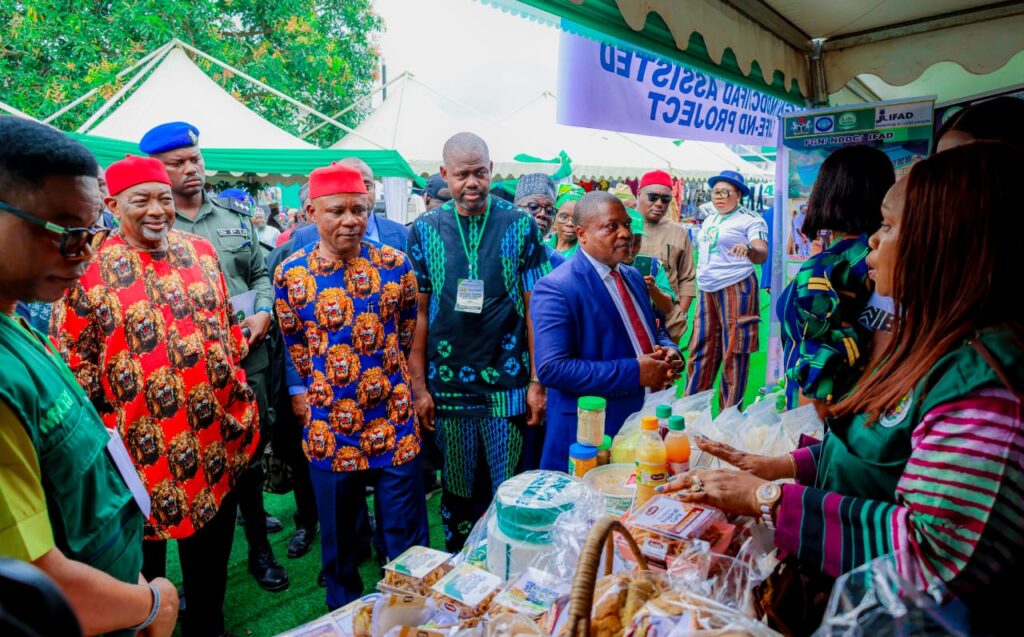
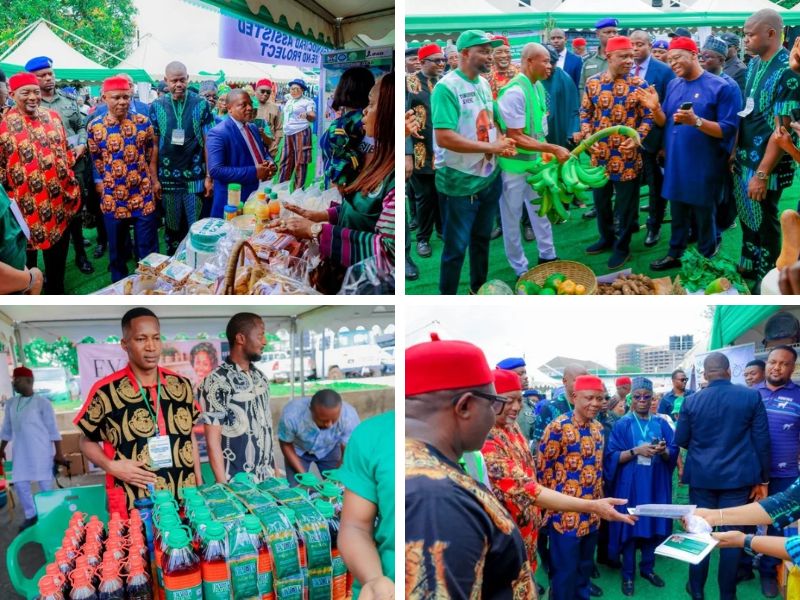
The event also featured exhibitions of food products and agricultural equipment. Governor Mbah and other dignitaries toured the exhibition stands.
The discussions come as Enugu continues to pursue wider economic development and investment opportunities. Recent activities include the inauguration of Enugu’s APC campaign council and plans to extend development projects across the state’s wards.
Food security also remains closely connected to nutrition and public health. The state has partnered with UNICEF to intensify efforts to tackle malnutrition.
Stakeholders at the agriculture meeting are expected to develop strategies for strengthening agricultural value chains, promoting agro-industrialisation and improving market access.
The success of the interventions will depend on effective implementation, sustained investment and stronger partnerships between governments, farmers and private businesses.