
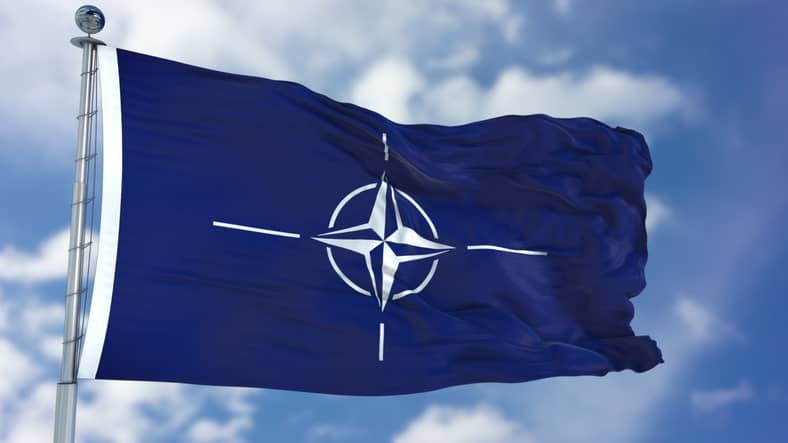
Trump Threatens NATO Exit Over Allies’ Refusal to Back Iran War.
…Calls alliance ‘paper tiger’, faults allies’ inaction
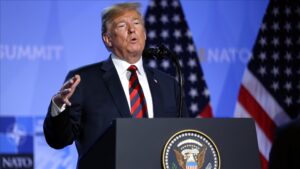
United States President, Donald Trump has threatened to exit the North Atlantic Treaty Organization, NATO. Trump threatens NATO exit over allies’ refusal to back Iran War. POTUS has again stirred controversy over the future of NATO, declaring that Washington may pull out of the transatlantic alliance following what he described as a lack of support from member states in the ongoing tensions involving Iran.
Trump, in an interview with The Telegraph on Wednesday, did not mince words as he criticised the alliance, branding it a “paper tiger” and questioning its relevance in the face of current geopolitical realities. His remarks come amid growing divisions between the United States and its European allies over how to respond to escalating tensions in the Middle East, particularly the disruption of oil shipments through the Strait of Hormuz.
Trump Expresses Long-Held Scepticism About NATO, Dismisses Plans to Rejoin the Bloc After Global Tension
According to the US leader, the refusal of NATO allies to support efforts linked to a potential conflict with Iran has reinforced his long-held scepticism about the bloc. He suggested that the idea of withdrawing the United States from NATO is no longer merely hypothetical but a serious consideration.
Asked directly whether he would reconsider US membership of the alliance after the conflict, Trump dismissed the notion, insisting that the issue had moved “beyond reconsideration.” He maintained that his doubts about NATO were not new, adding that he had always believed the organisation lacked the strength and unity it projects.
“I was never swayed by NATO. I always knew they were a paper tiger,” Trump said, adding that Russian President Vladimir Putin was also aware of the alliance’s perceived weaknesses.
The controversy comes against the backdrop of heightened global economic anxiety triggered by Iran’s closure of the Strait of Hormuz, a strategic maritime corridor responsible for transporting roughly one-fifth of the world’s oil supply. The disruption has led to rising energy prices and fears of a looming global recession, placing additional pressure on Western governments to respond decisively.
However, NATO members have reportedly been reluctant to support any US-led initiative to reopen the waterway, a development Trump described as both surprising and disappointing. He argued that the alliance, which has historically operated on the principle of collective defence, should have acted automatically in support of the United States.
“Beyond not being there, it was actually hard to believe,” Trump said. “I didn’t insist too much. I just think it should be automatic.”
Drawing comparisons with past US commitments, Trump referenced Washington’s support for Ukraine, noting that the United States had consistently stood by its allies even in conflicts that did not directly affect its national interests.
“We’ve been there automatically, including Ukraine. Ukraine wasn’t our problem. It was a test, and we were there for them, and we would always have been there for them. They weren’t there for us,” he added.
US Questions the Capacity of Britain’s Naval Forces
Trump also took aim at the United Kingdom, criticising Prime Minister Keir Starmer for declining to participate in what he described as a US-Israeli effort against Iran. In a sharply worded remark, the US president questions the capability of Britain’s naval forces, suggesting that the country’s military strength had declined significantly.
“You don’t even have a navy,” Trump said, in reference to the Royal Navy. “You’re too old and had aircraft carriers that didn’t work.”
While declining to offer direct advice to Starmer on defence spending, Trump criticised the UK government’s emphasis on renewable energy, particularly wind power, arguing that such policies were contributing to higher energy costs.
The White House has also echoed the president’s frustrations, with Secretary of State Marco Rubio describing NATO as a “one-way street.” Rubio accused member states of failing to grant the United States access to critical military bases and warned that Washington may be forced to “re-examine” its commitment to the alliance after the conflict.
Trump expressed support for Rubio’s stance, signalling a growing consensus within his administration that America’s long-standing role as NATO’s cornerstone may need to be reassessed.
The latest developments have sparked renewed debate among policymakers and analysts over the future of NATO and the broader implications for global security. While some experts warn that a US withdrawal could weaken the alliance and embolden adversaries, others argue that Trump’s remarks reflect deeper frustrations over burden-sharing and strategic priorities within the bloc.
As tensions continue to mount, the possibility of a fundamental shift in the United States’ foreign policy posture remains a source of concern for allies and observers alike.