

Enugu, UNICEF Intensify Fight Against Malnutrition
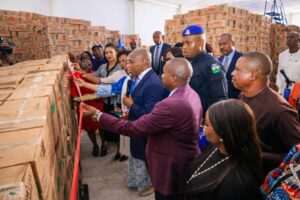
The United Nations Children’s Fund (UNICEF) has intensified the fight against malnutrition in partnership with the Enugu State Government. In a renewed push to tackle malnutrition, UNICEF handed over critical nutrition commodities aimed at improving the health outcomes of children and pregnant women across the state.
At a ceremony held in Enugu on Tuesday, UNICEF officials and state government representatives underscored the urgency of addressing malnutrition, describing it as a growing public health challenge that requires coordinated, sustained, and well-monitored interventions.
UNICEF Commends Enugu Government on The Fight Against Malnutrition
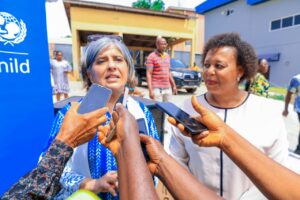
UNICEF’s Country Representative in Nigeria, Wafaa Saeed, who was represented by the organisation’s Chief of Nutrition Section, Nemat Hajeebhoy, commended the administration of Governor Peter Mbah for its proactive investment in nutrition programmes.
Saeed described Enugu as one of the first states in Nigeria to invest in multiple micronutrients through the Child Nutrition Fund, noting that the state had distinguished itself as a model for others.
“UNICEF commends Enugu State’s leadership and contribution to the Child Nutrition Fund, positioning the state as a model. Enugu is one of the first states to procure Multiple Micronutrient Supplements and among the few prioritising prevention through Small-Quantity Lipid-Based Nutrient Supplements,” she said.
The nutrition commodities, delivered under the Child Nutrition Fund through a joint financing arrangement between UNICEF and the state government, include Ready-to-Use Therapeutic Food for the treatment of severe acute malnutrition, Small-Quantity Lipid-Based Nutrient Supplements to support early childhood growth and development, and Multiple Micronutrient Supplements designed to improve maternal health and reduce anaemia among pregnant women.
Saeed, however, raised concerns about the increasing burden of malnutrition in Nigeria, stressing the need for effective monitoring systems, accountability frameworks, and community sensitisation to ensure that life-saving supplies reach vulnerable populations, particularly in underserved and hard-to-reach communities.
Executive Secretary, Primary Healthcare Development Agency Heights Key Benefits of the Enugu-UNICEF Fight Against Malnutrition

In her remarks, the Executive Secretary of the Enugu State Primary Healthcare Development Agency, Ifeyinwa Ani-Osheku, described the handover as a historic milestone in the state’s fight against malnutrition.
She disclosed that the intervention included 854 cartons of Ready-to-Use Therapeutic Food and 2,088 cartons of Small-Quantity Lipid-Based Nutrient Supplements, noting that the supplies would significantly boost both treatment and preventive strategies across the state.
According to her, the initiative represents more than the distribution of commodities.
“This is not just a transfer of supplies; it is a transfer of potential. These commodities will help us secure the future of our children and mothers,” she said.
Ani-Osheku further revealed that Enugu had become the only state in the federation to co-finance the procurement of Multiple Micronutrient Supplements through the Child Nutrition Fund, a move she said directly addresses the high rate of anaemia among pregnant women.
ALGON Assures of Effective Distribution of Nutritional Supplies
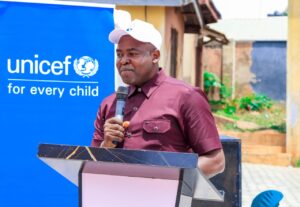
Also speaking, the Chairman of Igbo-Eze South Local Government Area and Deputy Chairman of ALGON in the state, Ferdinand Ukwueze, commended the governor for prioritising child survival and wellbeing.
He assured that local government authorities would ensure effective last-mile distribution of the commodities, stressing that communities at the grassroots would benefit from the intervention without delay.
A traditional ruler, Innocent Ogbodo, lauded the government’s commitment to healthcare and called for improved dedication among health workers to guarantee the success of the programme.
Policy Makers Speak on the Enugu-UNICEF Fight Against Malnutrition

The Commissioner for Children, Gender Affairs and Social Development, Ngozi Enih, described the initiative as a reflection of strong political will, noting that the timely release of counterpart funding had strengthened collaboration with UNICEF.
She added that the intervention would enhance ongoing efforts to prevent and manage malnutrition among vulnerable groups, particularly women and children.
Similarly, the Commissioner for Human Capital Development and Poverty Eradication, Benedette Okolie, emphasised the link between nutrition and productivity, stating that a healthy population is essential for sustainable development.
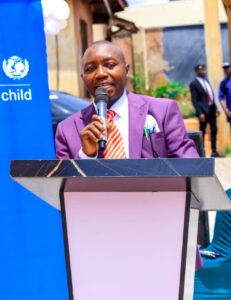
On his part, the Commissioner for Health, George Ugwu, assured that robust tracking systems had been put in place to ensure equitable distribution of the commodities across rural and hard-to-reach areas.
He noted that the government remained committed to ensuring that no eligible beneficiary was left behind.
The Special Adviser to the Governor on Donor Relations, Dubem Onyia Jnr, commended UNICEF for its continued support, describing the partnership as critical to improving health outcomes and advancing child welfare in the state.
Enugu Government Assures Commitment to UNICEF Partnership and Fight Against Malnutrition
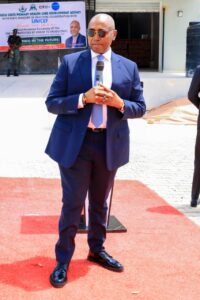
Responding on behalf of the governor, the Deputy Governor, Ifeanyi Ossai, reaffirmed the administration’s commitment to strengthening nutrition programmes and expanding access to essential healthcare services.
He disclosed that nutrition desk officers had been deployed across all 17 local government areas to enhance coordination, improve data tracking, and ensure that pregnant women and children receive appropriate nutritional support.
Ossai also highlighted the state’s Smart Schools feeding programme, which he said would provide at least one nutritious meal daily to pupils across more than 260 Smart Schools in the state’s 260 political wards.
He explained that the initiative was designed to complement ongoing nutrition interventions and address malnutrition from a holistic perspective.
While expressing appreciation to UNICEF for its sustained support, the deputy governor called for continued collaboration, noting that long-term success in tackling malnutrition would depend on consistent funding, transparency, and active community engagement.
Stakeholders at the event unanimously agreed that while the delivery of nutrition commodities marked significant progress, the real impact would depend on effective implementation, monitoring, and utilisation at the community level.
They stressed that addressing malnutrition requires not only government commitment but also the collective efforts of development partners, healthcare workers, and local communities to ensure that every child and mother has access to adequate nutrition.
The intervention, they added, represents a crucial step in safeguarding the health and future of the state’s most vulnerable population, while positioning Enugu as a leading example in Nigeria’s ongoing fight against malnutrition.
For More Stories click here