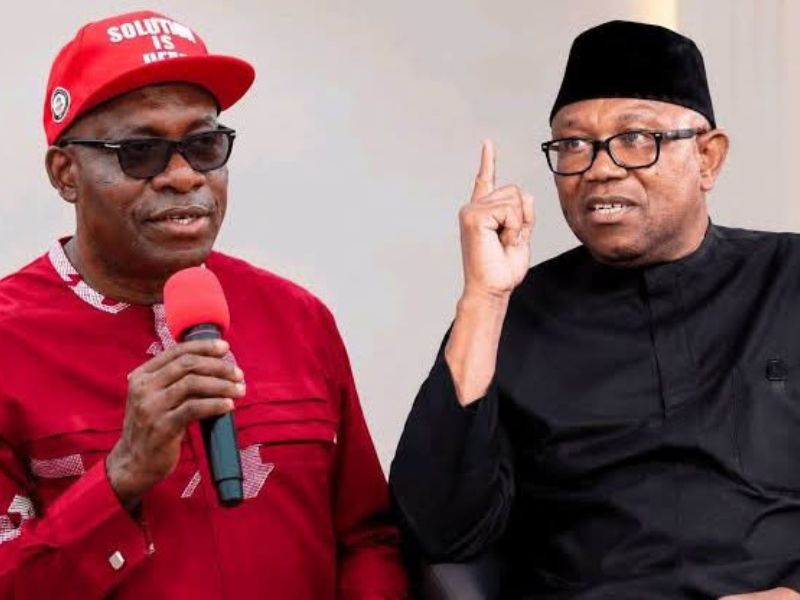
The Anambra State Government has renewed its dispute with former governor Peter Obi. This is over the financial position of the state when he left office in 2014.
The government, led by Governor Chukwuma Soludo, insists that the Peter Obi administration left outstanding loans. This is amidst other financial obligations for subsequent governments. It also rejected Obi’s claim that he handed over Anambra with substantial savings and no unpaid obligations.
The latest exchange followed an interview Obi granted Arise News on September 24, 2026. During the interview, the former governor disputed the government’s description of external financing linked to his administration as debts he personally left behind.
Obi maintained that he left more than $150 million in savings and investments for his successor. He also argued that the disputed facilities were mainly development programmes negotiated through the Federal Government. He said it should not be presented as conventional loans he personally obtained.
The renewed disagreement has become another major political issue surrounding the former governor’s record in Anambra. It also comes as political parties and their supporters prepare for the 2027 elections.
Torch TV News has previously reported on the Presidency’s challenge to Peter Obi over Anambra’s debt claims, highlighting how the financial dispute has continued to attract political attention.
Anambra Government Says Obi Left Outstanding Loans
In a statement, Anambra Commissioner for Information and Value Reorientation, Law Mefor, said the government was responding to Obi’s recent comments.
Mefor said Obi had challenged anyone to provide evidence that he left debts when he completed his tenure on March 17, 2014. The commissioner argued that the state government had provided records which, in its view, answered that challenge.
The Anambra Government said eight external loan facilities were associated with Obi’s administration. According to the state, the facilities had a combined contracted value of $123.77 million.
The government further said $92.35 million remained outstanding on those facilities as of June 30, 2026. It valued the outstanding amount at approximately N127.37 billion and said successive administrations had continued servicing the obligations through deductions from federal allocations.
The state said the facilities supported projects in areas including healthcare, education, agriculture, erosion management and community development.
The government has also maintained that participating states had responsibilities under the financing arrangements. It argued that the origin of the funds did not remove Anambra’s repayment obligations.
The issue has featured prominently in recent political exchanges involving Obi. Readers can also see Torch TV News’ report on Peter Obi’s visit to Jos and his meeting with victims of attacks.
Soludo Government Rejects Obi’s Explanation
The Anambra Government rejected Obi’s argument that the disputed facilities were Federal Government development programmes rather than loans he personally obtained.
The government argued that states had to participate in the arrangements and sign relevant agreements before accessing the funds. It therefore maintains that the obligations remained liabilities of the state regardless of the financing structure.
According to the state, the fact that the programmes involved international development institutions did not mean Anambra had no repayment responsibility.
The government also accused Obi of attempting to shift attention from the outstanding obligations by focusing on the savings and investments he said he left behind.
Mefor argued that both assets and liabilities should be considered when assessing the financial position of an administration at handover.
The disagreement has similarities with other recent political disputes involving claims about government finances and public resources. Torch TV News recently reported on SERAP’s demand for answers from INEC over alleged missing electoral funds.
Peter Obi Disputes the $123.77 Million Figure
Obi has rejected the Anambra Government’s description of the $123.77 million as debt he left behind.
The former governor argued that the government had combined different categories of financing and presented them as one debt figure. He said the distinction between approved facilities, actual drawdowns and outstanding balances was important when assessing the state’s financial position in 2014.
Obi also said the facilities were primarily World Bank and International Fund for Agricultural Development programmes negotiated by the Federal Government. According to his position, participating states accessed the programmes through subsidiary arrangements.
He maintained that he did not personally approach financial institutions to borrow the disputed funds or issue bonds on behalf of Anambra.
Obi also cited Debt Management Office figures in challenging the state’s presentation. He said Anambra’s external debt was about $30 million when he left office in March 2014.
The former governor questioned how the state could describe $123.77 million as debt inherited directly from his administration when the DMO figures he cited showed a different external debt position at the time he left office.
Obi Says He Left More Than $150 Million
Beyond disputing the debt claim, Obi said he left substantial funds and investments for the next administration.
During his Arise News interview, he said the amount exceeded $150 million. He argued that the savings should be considered when assessing the overall financial position of Anambra at the end of his tenure.
His position is that the state was not handed over in a financially distressed condition. He also rejected claims that his administration left unpaid salaries, pensions, gratuities or certified contractor obligations.
Obi’s former Secretary to the State Government, Oseloka Obaze, has also referred to a handover document which he said showed that the administration left N86.6 billion for its successor. However, reporting on the issue has noted that the document alone does not independently establish that all the stated funds were physically available at handover.
The dispute therefore involves different interpretations of the state’s assets, liabilities and financing arrangements.
It also raises questions about how government debt should be attributed when development programmes involve federal and state authorities. Similar disagreements over public finances have featured in other political debates across Nigeria.
For more coverage of political developments in the South-East, readers can follow Torch TV News’ report on APC campaigns in Enugu East.
Government Alleges Unpaid Workers’ Entitlements
The debt dispute is not limited to external financing.
The Anambra Government also alleged that the Obi administration left unpaid salaries, pensions and gratuities involving more than 700 former workers of the Anambra State Water Corporation.
The government referred to an arbitration process and a subsequent National Industrial Court judgment in making the claim. Obi, however, has continued to reject allegations that his administration left unpaid obligations of this nature.
The disagreement over workers’ entitlements adds another layer to the broader argument about the financial record of the former governor.
Obi has maintained that salaries, pensions and gratuities due before his departure were paid. He has also said contractors and suppliers who completed verified and certified work were not left unpaid.
The competing claims have not ended the disagreement. Instead, both sides continue to rely on different records and interpretations of the state’s finances.
The issue of unpaid obligations has also featured in other Nigerian public-sector disputes. Torch TV News recently reported on doctors beginning an indefinite strike over unpaid allowances.
Dispute Over Meaning of ‘Debt’
At the heart of the disagreement is how the disputed financing should be classified.
The Anambra Government considers the facilities liabilities that were contracted during Obi’s administration and remain payable by the state. The government therefore argues that the former governor’s claim that he left no debt does not align with the existence of outstanding balances.
Obi, on the other hand, says the government’s figure does not accurately represent the debt he left when he handed over power. He has argued that the state must distinguish between the total value of development facilities, the amount drawn during his tenure and the amount outstanding when he left office.
Both sides therefore agree that development financing existed. Their disagreement centres on how those facilities should be described and attributed to the financial record of the former administration.
The Anambra Government has published details of the facilities and their outstanding balances. Obi has challenged the interpretation of those figures and cited DMO data to support his position.
This distinction is important because the contracted value of a facility is not necessarily the same as the amount drawn or the amount outstanding at a particular date.
The ongoing dispute will therefore continue to depend on the underlying financial records and how the different figures are reconciled.
Anambra Government Criticises Obi’s Public Image
The Soludo administration also took issue with the public perception surrounding Obi’s record as governor.
Mefor described Obi’s reputation as the result of what he called effective “media packaging.” The commissioner argued that public discussion about Obi’s administration has often focused heavily on savings and investments while overlooking the liabilities cited by the current government.
The statement accused Obi and his supporters of applying different standards when responding to criticism. The government said the former governor should accept scrutiny over both the assets and liabilities associated with his tenure.
Obi has not accepted the government’s characterisation of his record. Instead, he has continued to defend his stewardship and challenge the figures presented by the Soludo administration.
The dispute has now become part of a wider political conversation ahead of 2027. Obi is the presidential candidate of the Nigeria Democratic Congress, while Soludo remains governor of Anambra State.
Torch TV News has also covered other developments involving Obi, including his proposed economic and political agenda ahead of the 2027 elections.
What Both Sides Are Saying
The Anambra Government’s position is that Obi’s administration signed eight external facilities worth about $123.77 million and that $92.35 million remained outstanding as of June 2026.
The government says the obligations have continued to affect the state’s finances because successive administrations have been servicing the facilities. It has therefore rejected the argument that the financing should not be described as debt associated with the former administration.
Obi’s position is different. He says he did not leave Anambra with $123.77 million in debt and argues that the government has combined separate categories of financing.
He has also maintained that he left more than $150 million in savings and investments. Obi further insists that he left office without unpaid salaries, pensions, gratuities or verified contractor obligations.
The two positions remain unresolved in the latest public statements.
The dispute is therefore less about whether development financing existed and more about how the facilities should be classified, when the liabilities arose and what amount was actually outstanding when Obi handed over power.
Financial Record Becomes Political Talking Point
The renewed dispute has placed Peter Obi’s record as Anambra governor back at the centre of political discussion.
Obi served as governor from 2006 until March 2014. More than a decade after his departure, the financial record of his administration is now being debated publicly by the former governor and the current state government.
The argument also reflects a broader political practice in Nigeria, where the financial records of previous administrations often become subjects of scrutiny after changes in government.
The latest exchange between Obi and the Soludo administration is likely to remain part of political discussions as the 2027 elections draw closer.
Torch TV News has also reported on calls for Nigerian youths to take politics beyond social media, another issue that has featured in discussions about Nigeria’s political future.
For now, the Anambra Government maintains that Peter Obi left outstanding financial obligations. Obi continues to reject that description and insists that his administration left the state in a strong financial position.
The disagreement remains a matter of competing claims, financial records and differing interpretations of the financing arrangements. Further examination of the relevant DMO records, loan agreements, drawdowns, repayments and handover documents would be required to fully reconcile the competing accounts.
Other recent political stories from the region include the NACCIMA backing for Enugu’s economic ambition and the latest developments around the Enugu local government elections.