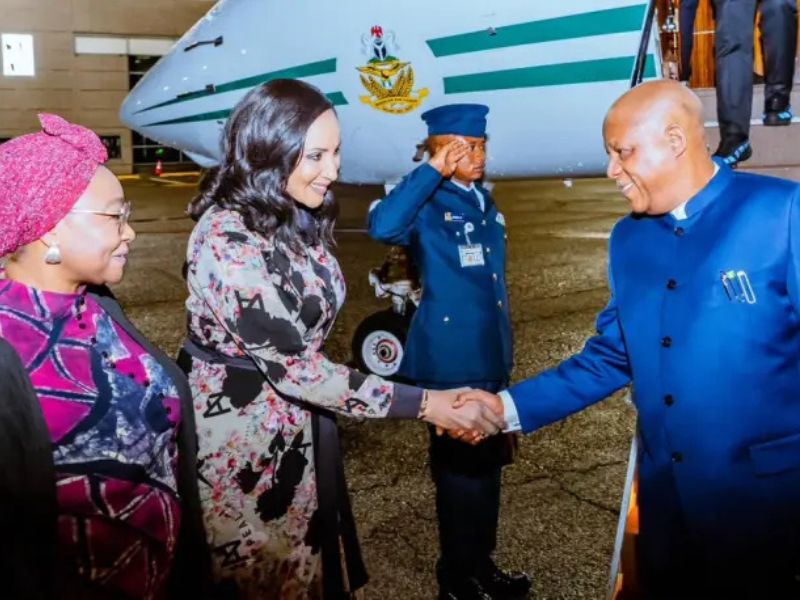
Vice President Kashim Shettima has arrived in New York, United States, to represent President Bola Tinubu and lead Nigeria’s delegation to the 81st United Nations General Assembly.
Shettima said Nigeria’s participation at the global gathering would be guided by the country’s national interest. His commitment to multilateralism and efforts to reform international institutions. The 81st UNGA General Debate is scheduled for September 22 to 28, 2026. Theme is, “Restoring trust, managing transformation: A United Nations that delivers for all.”
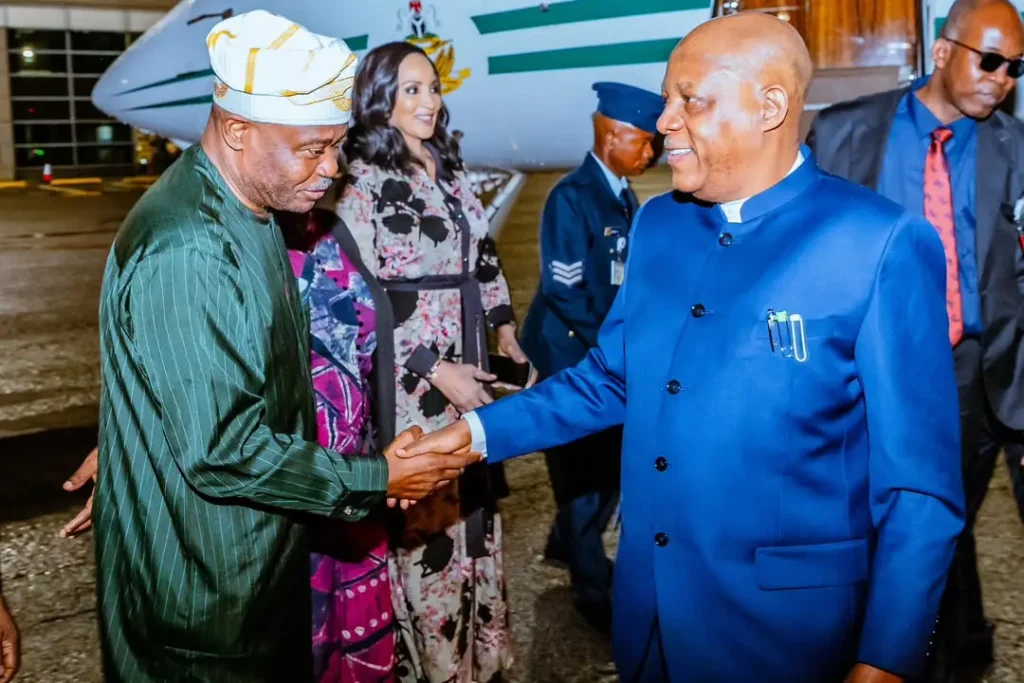
The Vice President arrived in New York alongside Rivers State Governor Siminalayi Fubara, Minister of State for Budget and Economic Planning Doris Uzoka-Anite and other senior government officials.
His arrival marks the beginning of Nigeria’s participation in a week of high-level diplomatic engagements involving world leaders, international organisations and development partners.
Shettima outlines Nigeria’s position
Speaking after his arrival, Shettima said Nigeria would engage other countries from the standpoint of its national interest.
He also reaffirmed Nigeria’s support for multilateralism but said international institutions must reflect current economic and demographic realities. According to him, developing countries should have a stronger voice in global decision-making.
Shettima said Nigeria would use its presence at the General Assembly to advance its interests while supporting efforts to make global institutions more representative and equitable.
The Vice President is expected to deliver Nigeria’s national statement during the General Debate. His address will outline the country’s positions on major international issues affecting peace and security, development, economic growth and international cooperation.
Nigeria’s international economic interests are also expected to feature in the delegation’s engagements. Earlier this month, the RMAFC sought Chinese investment to boost Nigeria’s oil and gas revenue as the country continues to pursue foreign investment opportunities.
Nigeria pushes for global institutional reforms
Shettima said Nigeria would continue to advocate reforms that would make global institutions more responsive to present-day realities.
The position includes calls for stronger representation for developing countries in international decision-making. Nigeria has also identified reforms to the global financial architecture as one of the issues it intends to advance during the UNGA engagements.
The Vice President is expected to discuss issues including sustainable development, climate finance and access to technology. Stronger representation for Africa in global decision-making is also expected to remain part of Nigeria’s diplomatic agenda.
The push for greater African participation in international institutions comes as countries on the continent seek stronger roles in decisions affecting trade, development financing, climate policy and global security.
Nigeria’s broader economic diplomacy has also involved efforts to attract investment from major international partners. The country’s push for investment is reflected in developments such as the SEDC’s planned 50,000-hectare agro-mechanisation project in Enugu, which is focused on agriculture, employment and economic development.
Shettima to hold high-level meetings
Beyond his address at the General Debate, Shettima is expected to participate in several high-level meetings during his stay in New York.
He will also hold bilateral discussions with leaders from other countries, international organisations and development partners. These engagements are expected to provide opportunities for Nigeria to discuss areas of mutual interest and strengthen diplomatic and economic partnerships.
The Vice President’s schedule is also expected to include discussions around climate action, development and other issues considered important to Nigeria and the wider African continent.
Nigeria has increasingly used international engagements to pursue economic partnerships and investment opportunities. Earlier this month, Nigeria and India agreed to work toward restoring bilateral trade to nearly $15bn, according to a report by Punch.
Officials receive Vice President in New York
On arrival in New York, Shettima was received by several senior Nigerian government and diplomatic officials.
Those who received him included Lagos State Governor Babajide Sanwo-Olu, Deputy Chief of Staff to the President in the Office of the Vice President Ibrahim Hadejia, Foreign Affairs Minister Bianca Odumegwu-Ojukwu and Minister of Women Affairs Imaan Sulaiman-Ibrahim.
Also present were Minister of Solid Minerals Development Dele Alake and Nigeria’s Permanent Representative to the United Nations, Jimoh Ibrahim.
The delegation is expected to work together throughout the UNGA programme as Nigeria presents its priorities and participates in diplomatic discussions.
The presence of senior officials reflects the broad range of issues Nigeria intends to raise during the gathering. These include international finance, development, climate-related financing, technology access and Africa’s representation in global institutions.
Nigeria’s domestic development priorities are also linked to its international economic engagements. The NNPC’s launch of its first smart self-service filling station in Abuja is one example of the government’s wider push toward modernising parts of the energy sector.
National interest remains central
Shettima stressed that Nigeria’s international engagements would be conducted from the standpoint of national interest.
He said the country would engage its international partners firmly while continuing to support reforms that could give developing countries greater influence within the global system.
The statement places Nigeria’s national priorities at the centre of its participation at the General Assembly. It also reflects the government’s stated position that international institutions should adapt to changes in global economic and demographic realities.
The Vice President’s comments come as Nigeria continues to navigate issues involving foreign investment, development financing and international economic cooperation.
The country’s diplomatic engagements also include discussions around energy and investment. The NNPC’s response after an oil tanker was intercepted with 2,145kg of cannabis was a separate domestic security matter, but it also involved issues concerning Nigeria’s energy sector and regulatory institutions.
Nigeria to address peace and security
Peace and security will form part of Nigeria’s agenda during the General Debate.
Shettima is expected to outline the country’s position on international challenges that affect security and development. Nigeria’s experience with terrorism, kidnapping and other security threats also gives the country a direct interest in international cooperation on security matters.
The government has continued to seek cooperation with other countries and international organisations on issues affecting national and regional security.
Nigeria’s position at the UNGA will therefore extend beyond economic matters. The country is expected to participate in discussions on global cooperation and issues that have implications for stability and development.
Recent domestic security developments have also highlighted the importance of effective security cooperation. In one recent operation, troops rescued 23 kidnapped victims and arrested four suspected Lakurawa members in Sokoto.
Climate finance and technology access
Climate finance is another area Nigeria is expected to highlight during the UNGA.
Developing countries, including Nigeria, have continued to seek greater access to financing for climate-related projects. Technology access is also expected to feature in Nigeria’s engagements as countries negotiate over development and the digital economy.
Shettima’s delegation is expected to use bilateral meetings to discuss these issues with international partners. Such meetings can provide opportunities to explore cooperation, financing arrangements and technical partnerships.
The issues are particularly relevant to Nigeria as it seeks to balance economic development with environmental concerns and the transition within the energy sector.
The country has also been exploring alternative energy options domestically. The government’s CNG programme has expanded across several states, with President Tinubu saying Nigerians should begin to see lower transportation costs from October 1. The CNG programme and expected reduction in transport fares are part of Nigeria’s wider energy transition efforts.
Africa’s voice at global institutions
Another priority expected to feature in Nigeria’s UNGA engagements is stronger African representation in global decision-making.
Shettima said Nigeria supports a global system that gives developing countries a stronger voice. The position reflects Nigeria’s longstanding interest in increasing Africa’s influence in institutions that shape international economic and political decisions.
The Vice President is expected to engage other African leaders and international partners during the General Assembly week. Discussions are likely to cover issues affecting the continent’s development, financing and international representation.
Nigeria has also continued to engage with African and international partners on political and economic issues. In another recent development, Wike responded to Uzodimma over the Rainbow Coalition’s support for Tinubu, highlighting ongoing political developments ahead of Nigeria’s 2027 elections.
Economic diplomacy on the agenda
Nigeria’s participation at the UNGA also provides an opportunity to pursue economic diplomacy.
The government has repeatedly highlighted the importance of attracting investment, expanding trade and strengthening partnerships with international institutions. Shettima’s meetings with world leaders and development partners are expected to provide opportunities for discussions in these areas.
The Vice President’s delegation is expected to present Nigeria as a country seeking partnerships that support development and economic growth.
Issues around access to international financing are also expected to feature. Nigeria has been seeking reforms to the international financial system, particularly in areas that affect developing countries’ access to affordable financing.
The country’s financial interests have also generated domestic debates. SERAP recently demanded answers from INEC over alleged missing electoral funds, another development involving questions around public finance and accountability.
Shettima represents Tinubu at the General Assembly
Shettima’s attendance follows President Tinubu’s decision to mandate him to represent the President and lead Nigeria’s delegation.
The Presidency announced on Sunday that Shettima would head the delegation, which includes governors, ministers and other senior government officials. The Nigerian Permanent Representative to the UN, Jimoh Ibrahim, has also said Nigeria will be adequately represented despite Tinubu’s absence.
Ibrahim said more than 60 per cent of those scheduled to speak at the General Assembly were being represented by vice presidents or foreign ministers. He also said Nigeria would retain its designated position at the General Assembly, with Shettima representing the President.
Shettima has previously represented Tinubu at the 79th and 80th UNGA sessions in 2024 and 2025. His latest assignment therefore continues his role in representing Nigeria at the annual global gathering.
The development has also generated political reactions in Nigeria. Former Vice President Atiku Abubakar has criticised Tinubu’s absence, while the Presidency and Nigeria’s UN envoy have maintained th