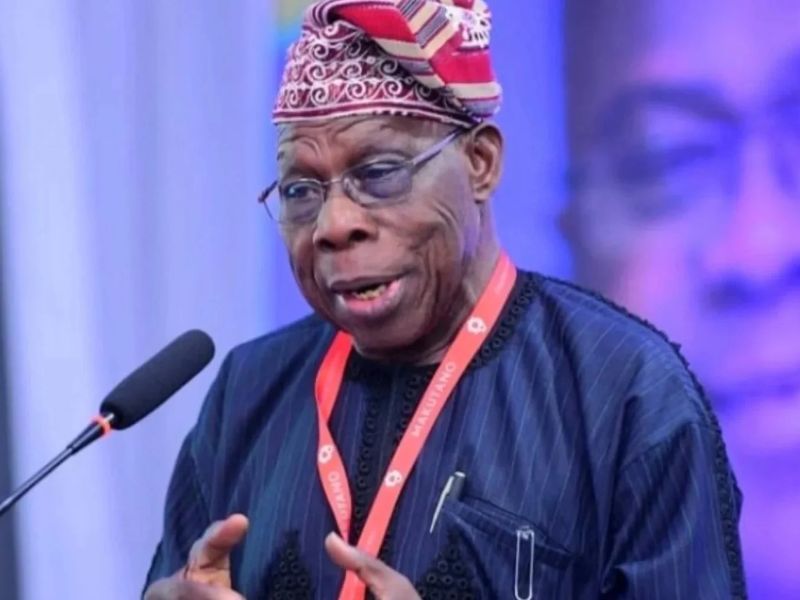
Former President Olusegun Obasanjo has criticised President Bola Tinubu’s position on government borrowing. He warned that excessive debt could impose a devastating burden on future generations.
Obasanjo described debt as more damaging than leprosy. He dismissed Tinubu’s assertion that borrowing was not inherently harmful if the government could repay its obligations.
The former President spoke on Friday at the Ajibosin Platform in Abeokuta, Ogun State. The public forum focused on the theme, “Leveraging Artificial Intelligence to Solve Grassroots Problems and Accelerate National Development.”
His comments followed Tinubu’s request for National Assembly approval for fresh external loans. The proposed borrowing includes $20.52 billion and €1.045 billion under the Federal Government’s 2026–2027 Supplementary External Borrowing Plan.
Tinubu Seeks Approval for Fresh External Loans
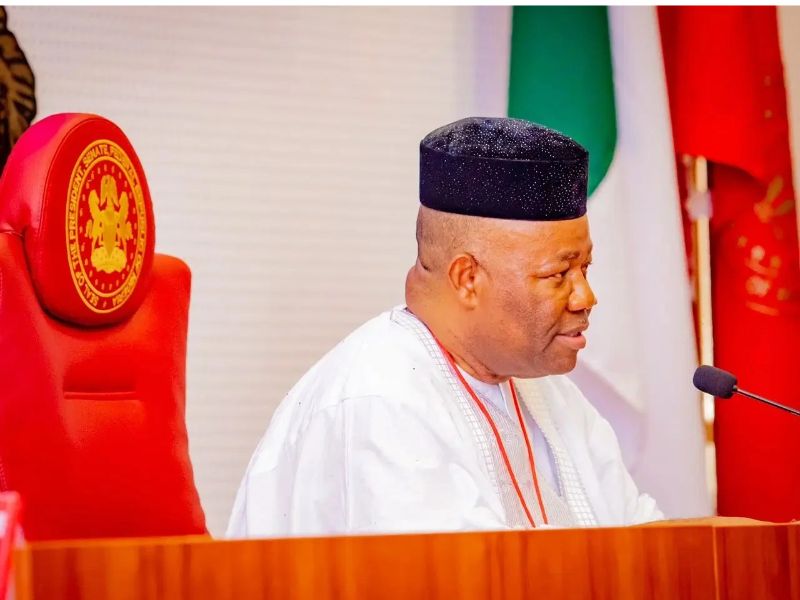
The President’s borrowing request was conveyed in a letter read by Senate President Godswill Akpabio during plenary. The proposed loans would finance projects across several critical sectors.
These include infrastructure, agriculture, healthcare, education, water supply and security. The plan also covers employment generation and financial management reforms.
Tinubu said the additional external financing was necessary to address Nigeria’s infrastructure deficit. He also argued that borrowing would help bridge funding gaps affecting development projects.
The request was referred to the Senate Committee on Local and Foreign Debts for consideration. Lawmakers are expected to examine the proposal before the government proceeds with the borrowing plan.
The latest request has renewed public debate about Nigeria’s debt profile and borrowing strategy. It follows earlier reports that Tinubu sought National Assembly approval for additional external loans.
Obasanjo Rejects Tinubu’s Defence of Borrowing
Tinubu had defended his administration’s borrowing policy in April. He argued that loans should not automatically attract negative reactions if the government could repay them.
“If we have to borrow, we borrow. Borrowing is not leprosy, we just have to work hard to be able to pay for it,” the President said.
He made the statement during a meeting with Plateau State leaders at the State House. The delegation was led by Governor Caleb Mutfwang and APC National Chairman, Prof. Nentawe Yilwatda.
However, Obasanjo strongly disagreed with the President’s comparison. He warned that the consequences of excessive borrowing could extend beyond the current generation.
“And for anybody to say debt is no leprosy, is absolute nonsense. Debt is worse than leprosy. Because leprosy destroys only one person. Debt destroys generations,” he said.
Obasanjo’s remarks reflect his concern about the long-term consequences of accumulating public debt. His comments have also brought renewed attention to the government’s borrowing plans.
Obasanjo Questions Nigeria’s Economic Performance
The former President also expressed concern about the depreciation of the naira. He recalled that the currency exchanged at one naira to $1.85 when he established his farm 47 years ago.
He questioned Nigeria’s economic performance over the period, particularly the decline in the currency’s value.
“When I started my farm, 47 years ago, naira to the dollar was one naira to $1.85. Forty-seven years ago. What has Nigeria done in 47 years that we now have 1,500 naira to the dollar? What have we done?” he asked.
His remarks highlighted concerns about the country’s exchange rate and wider economic performance. The naira’s depreciation has remained a major subject of public debate.
The government has defended its economic reforms as necessary to address longstanding structural problems. Meanwhile, critics have continued to question their impact on households and businesses.
For related coverage, see RMAFC’s efforts to attract Chinese investment and the Chinese envoy’s call for Tinubu’s reforms to continue beyond 2027.
Obasanjo Questions Capacity of Nigerian Leaders
Obasanjo also questioned the knowledge and capacity of Nigeria’s political leaders. He asked whether those in positions of authority understood the country’s challenges and could provide practical solutions.
“What do our leaders know? And what do they not know? And from what they know, what can they do for us?” he asked.
The former President’s comments extended beyond borrowing and currency depreciation. He also challenged the country’s approach to economic planning and leadership.
He argued that Nigeria needed leaders who understood the country’s problems. He further questioned whether those in authority could translate their knowledge into policies that improve citizens’ welfare.
Former President Questions Reliance on World Bank, IMF
Obasanjo also criticised Nigeria’s reliance on the World Bank and the International Monetary Fund. He argued that the institutions were established before Nigeria gained independence.
According to him, their economic prescriptions might not adequately reflect Nigeria’s unique circumstances. He cautioned against depending on external policies without considering the country’s needs.
“World Bank and IMF were not designed for us. They were not built by us. They were built before we became independent. And that’s the people who would determine what we do,” he said.
His comments raised questions about the extent to which Nigeria should rely on external economic institutions. He maintained that the country needed to consider its own circumstances when developing economic policies.
Nigeria’s Debt Debate Continues
Obasanjo’s criticism comes as the Federal Government seeks legislative approval for another round of external borrowing. The proposed loans are intended to finance projects across infrastructure and other development sectors.
Tinubu has maintained that borrowing can support development when governments have the capacity to repay. Obasanjo, however, warned that mounting debt could create long-term consequences for future generations.
The debate also comes amid wider discussions about the government’s economic reforms. President Tinubu has continued to defend the policies, while critics have raised concerns about their effects.
The APC has also maintained that the reforms are necessary to address Nigeria’s economic challenges. Related coverage includes Mbah’s defence of Tinubu’s fuel subsidy removal policy.
Other reports have examined the government’s economic interventions, including Tinubu’s proposed reduction in transport fares and the administration’s cash transfer programme.
The disagreement between Obasanjo and Tinubu has therefore brought borrowing and debt sustainability back into public discussion. The National Assembly’s consideration of the proposed loans will determine the next stage of the Federal Government’s borrowing plan.