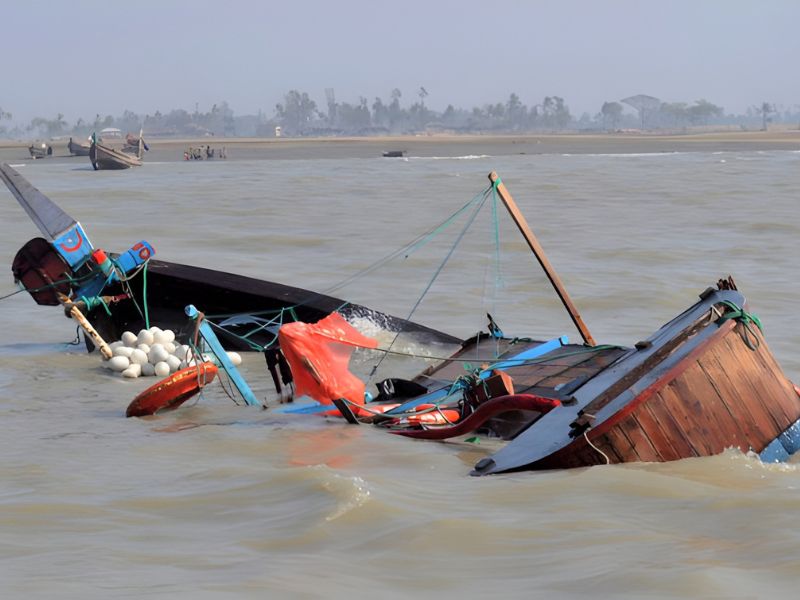
Six people have died after a boat carrying mourners capsized on the Buruku River in Buruku Local Government Area of Benue State.
The incident occurred around 11 a.m. on Saturday as more than 70 people returned from a burial ceremony. The tragedy happened months after the Benue State Government introduced stricter safety rules for water transport.
Raymond Zege, chairman of Buruku Local Government Area, confirmed the incident to journalists. He said the victims were among mourners from neighbouring Gboko Local Government Area.
According to Zege, the boat developed an engine problem while returning from the burial. He also said the vessel was overloaded, making it difficult for passengers to remain safe after the engine failed.
The incident has renewed concerns about water transport safety in communities that depend on rivers for movement. It also raises questions about compliance with safety measures introduced by the state government earlier this year.
For another report involving a fatal incident in Nigeria, readers can also see Okochiri Fire Incident: Mother, Three Children Die in Rivers Inferno.
Boat Engine Failure Triggers Panic
Zege said the boat’s engine failed while the mourners were travelling across the river. He explained that another boat attempted to come to their rescue after the passengers began struggling to keep the vessel afloat.
However, the situation became more dangerous when strong waves hit the boat carrying the mourners. The passengers reportedly panicked as they tried to move towards the rescue vessel.
Zege said the weight of the overloaded boat contributed to the tragedy. He explained that the vessel eventually sank before the passengers could safely reach the other boat.
Six people died in the incident, according to the local government chairman. The authorities have continued efforts to establish the full circumstances surrounding the mishap.
The incident comes amid broader concerns about safety in Nigerian communities where residents rely on waterways. Similar accidents have repeatedly raised questions about boat capacity, weather conditions, life jackets and enforcement.
Readers can also follow Family Demands Investigation Into Death of Anambra Nursing Student for another recent report involving calls for an investigation into a death.
Benue Government Had Introduced New Safety Rules
The Benue State Government introduced stricter water transport measures in January following another boat tragedy in Buruku.
The earlier incident involved six students who drowned after a boat carrying them across the river capsized. The tragedy prompted the government to meet with marine workers, security agencies and other stakeholders.
During the meeting, the Special Adviser to the Governor on Security and Internal Affairs, Joseph Har, announced new safety requirements for river transport operators and passengers.
Under the measures, passengers were required to wear life jackets. Boat operators were also prohibited from carrying more passengers than their vessels could safely accommodate.
The government further restricted river transport to daytime operations. Operators were directed to stop water transport activities by 8 p.m. each day.
Har said the measures were designed to establish stronger safety standards for people using the state’s waterways. He also directed operators to monitor weather conditions and follow recognised safety practices.
For more stories about public safety and emergencies, readers can also read Enugu Lawmaker Calls for Safer Measures After Coal Camp Drowning.
Life Jackets Remain a Major Concern
Zege said authorities had provided life jackets for people using the Buruku River crossing. However, he acknowledged that enforcing their use remained a challenge.
According to him, some passengers complained that the jackets were uncomfortable. This reportedly made some people reluctant to wear them despite the safety requirement.
The latest accident has therefore raised fresh concerns about compliance with the government’s regulations. The rules were introduced specifically to reduce the risk of another tragedy on the waterways.
Har had earlier disclosed that some life jackets provided for river users had been vandalised. He appealed to local councils and private individuals to help provide replacement safety equipment.
The government also proposed a joint enforcement team to monitor compliance. The team was expected to include the Department of State Services, Nigeria Police Force, National Inland Waterways Authority and the state Civil Protection Guards.
The effectiveness of such enforcement remains important as communities continue to rely on river transport. A combination of proper equipment, responsible boat operation and consistent enforcement could help reduce the risks.
Readers can also see Niger Miners’ Deaths: Survivors Recount Suffocation Inside NSCDC Custody for another report involving questions about safety and emergency response.
Overloading Also Blamed for Accident
Overloading was another major issue identified in the account given by the Buruku council chairman.
Zege said the boat was carrying more than it could safely handle when the engine failed. The additional weight made it harder for the vessel to remain stable during the emergency.
The boat also encountered strong waves while another vessel attempted to rescue the passengers. The combination of the engine failure, reported overloading and water conditions contributed to the sinking, according to his account.
The circumstances have again highlighted the importance of enforcing passenger limits. Such limits are designed to give boats enough capacity to remain stable during normal movement and emergencies.
The state government had specifically prohibited operators from overloading their boats under the safety rules announced in January. The latest incident has raised questions about whether those rules were being adequately followed.
For another story about emergency response in Nigeria, readers can follow FCT Police Arrest 300 Suspects in Raid on Crime Hotspots.
Authorities Begin Search and Rescue
The Commissioner for Marine and Blue Economy, Denis Iyaghigba, said he had received preliminary information about the accident.
Iyaghigba said initial reports indicated that a strong current pushed the boat towards an abandoned barge. The vessel reportedly struck the barge at a corner of the river before overturning.
The commissioner urged families who believed their relatives were aboard the boat to remain calm. He also advised them to wait for verified information from the authorities.
Iyaghigba said he directed boat operators and their union to mobilise and support the search and rescue operation. Their involvement was expected to assist authorities as efforts continued around the river.
The search operation was taking place as authorities worked to establish the full number of people who were aboard the boat. The report confirmed six deaths from the incident.
For another story involving a major search and rescue effort, readers can also see Oyo State Police Rescue 17 Children, Arrest Seven Over Alleged Child-Stealing Network.
River Communities Depend on Water Transport
The Buruku River remains important to communities that use waterways to travel between locations. Residents also rely on river transport for trade and access to essential services.
However, the dependence on waterways creates safety challenges when boats operate without adequate equipment or when operators ignore passenger limits.
The latest tragedy has brought those concerns back into focus. It has also highlighted the need for passengers and operators to comply with safety requirements.
Life jackets can provide important protection during a boat accident. However, their availability alone may not be enough if passengers refuse to wear them or operators fail to enforce their use.
Weather and river conditions can also change quickly. Boat operators therefore need to assess water conditions before beginning journeys and avoid unnecessary risks.
Readers can also follow CSDA Takes Community Sensitisation PRA Exercise to Six Enugu Communities for another report on community-level government engagement.
Government Safety Measures Face Fresh Test
The Benue boat mishap occurred several months after the state government announced its new water transport regulations.
The rules were introduced after another deadly accident in Buruku. They included compulsory life jackets, a ban on overloading and restrictions on nighttime river transport.
The latest incident has placed renewed attention on how effectively those measures are being enforced. Zege’s comments suggest that getting passengers to comply with the life-jacket requirement remains difficult.
The reported overloading of the boat also raises questions about enforcement at river crossings. Operators and passengers both have responsibilities under the safety framework.
Authorities had also planned joint monitoring involving security and waterway agencies. Such coordination could help identify unsafe boats and discourage operators from violating the rules.
For more stories about government efforts to improve infrastructure and public services, readers can check Peter Mbah Unveils 10,000 Achievements.
Calls for Greater Waterway Safety
The deaths are likely to intensify calls for stronger safety enforcement across Benue’s waterways.
Beyond providing life jackets, authorities may need to ensure that passengers actually wear them before boats leave the riverbank. Operators also need to comply with passenger limits and other regulations designed to prevent accidents.
Regular inspections could help identify boats with mechanical problems before they begin journeys. Better monitoring of weather and river conditions could also reduce risks during periods of strong currents or waves.
The involvement of local councils, security agencies and waterway authorities could strengthen enforcement. However, consistent implementation remains essential for such measures to have an impact.
The latest accident shows the danger that can arise when several risks occur at the same time. An engine failure can become far more dangerous when a boat is overloaded and passengers are not properly equipped.
Readers can also follow SEDC to Launch 50,000-Hectare Agro-Mechanisation Project in Enugu for another story involving regional development and community needs.
Six Confirmed Dead in Buruku River Accident
The Buruku boat mishap has left six people dead after a vessel carrying mourners overturned while returning from a burial ceremony.
The victims were reportedly travelling back to neighbouring Gboko Local Government Area when the boat developed an engine problem. Another boat attempted to assist, but strong waves and the weight of the vessel reportedly caused it to sink.
The incident occurred despite safety measures introduced by the Benue State Government earlier in the year. Those measures included compulsory life jackets, a ban on overloading and restrictions on water transport hours.
Authorities have continued efforts to gather verified information about the incident. Families affected by the tragedy are also awaiting further details from the search and rescue teams.
The accident has once again highlighted the need for effective enforcement of safety regulations on Nigerian waterways. It also shows the importance of proper boat maintenance, safe passenger limits and the consistent use of life jackets.
For another recent report involving a major tragedy in Nigeria, readers can see Niger Miners’ Deaths: Artisanal Mining President Demands Thorough Investigation.
As search and rescue efforts continue, the Buruku tragedy remains a reminder of the risks faced by communities that depend on water transport. Stronger compliance with existing safety rules could help prevent similar incidents in the future.