
Nigeria is grappling with an annual fish supply deficit exceeding 2.2 million tonnes, as domestic production remains significantly below national demand.
The Federal Government disclosed this shortfall while announcing a $200 million World Bank-backed initiative to expand fish production across the country.
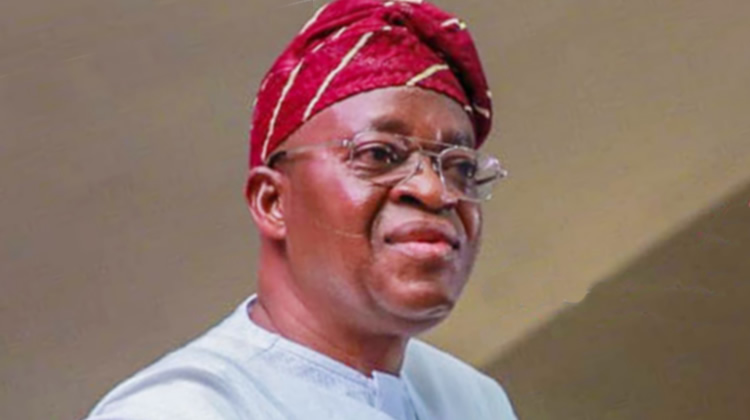
The Minister of Marine and Blue Economy, Dr Adegboyega Oyetola, disclosed this in a statement issued on Sunday by his Special Adviser, Dr Bolaji Akinola.
According to the ministry, Nigeria requires approximately 3.6 million tonnes of fish annually but produces only 1.4 million tonnes. This leaves a significant supply gap that imports currently cover at a cost of nearly $1 billion annually.
Speaking through the Senior Special Assistant to the President on Marine and Blue Economy, Prof. Busayo Fakinlede, Oyetola stressed the need to reduce Nigeria’s dependence on imported fish.
He spoke at an aquaculture investment training programme in Abuja. The minister described fish production as essential to food security, household nutrition and rural livelihoods.
“Fish is a pillar of food security, household nutrition and rural livelihoods. No nation can call itself food secure while it imports most of the fish it eats. Our ambition is to produce more, import less and, in time, become a net exporter. That ambition can be achieved only when every state plays its part,” he said.
The figures show that domestic production currently meets only about 39 per cent of Nigeria’s annual fish requirement. Consequently, imports account for the remaining supply gap.
The development highlights the need for stronger agricultural investment and local production. Recently, ActionAid Nigeria urged increased funding for agriculture, including aquaculture, to strengthen food security and improve farmers’ incomes.
World Bank Commits $200m to Fish Production
Oyetola disclosed that the World Bank Group had committed $200 million to support fisheries and aquaculture development in Nigeria.
The funding will reach state governments through concessional loans. It will support expanded production capacity, attract private investment and strengthen the country’s food supply.
Under the proposed framework, states will identify priority fisheries value chains and assess investment opportunities.
They will also develop bankable projects with measurable production targets. The approach aims to encourage states to take greater responsibility for expanding local fish production.
The initiative aligns with wider efforts to improve agricultural productivity and food security. The Federal Government and Enugu State Government recently reaffirmed their commitment to strengthening agricultural value chains and market access.
Similarly, Enugu State has pursued commercial agriculture and agro-industrialisation through investments in production, processing and storage facilities.
The state’s efforts include reviving dormant agricultural assets to increase food production and create jobs.
FG Seeks Stronger State Participation
The minister said Nigeria could achieve fish sufficiency through stronger collaboration among federal and state governments, investors and development partners.
He made the remarks during the Executive Training on Aquaculture Investment Guide. The Ministry of Marine and Blue Economy organised the programme in collaboration with the World Bank Group.
The training attracted commissioners from Rivers, Bayelsa, Delta and Cross River states. Permanent secretaries and fisheries officials from across the federation also participated.
Participants received training in investment planning, risk management, environmental safeguards and public-private partnerships.
Oyetola also announced plans for a post-training stakeholders’ roundtable. The meeting will strengthen implementation and coordinate commitments from participating states.
The minister said state-level participation would remain critical to expanding fish production and attracting investment into the sector.
Nigeria’s agricultural development drive has also received attention through regional initiatives. The South-East Development Commission, for instance, plans to expand mechanised farming through its 50,000-hectare agro-development project.
The commission’s programme aims to improve food production, create jobs and strengthen agricultural value chains.
Nigeria Records 27.3% Increase in Fish Production
Oyetola attributed recent progress in the fisheries sector to several government initiatives.
These include the inauguration of the Technical Committee on Accelerating Fish Production in August 2026 and the digitisation of fish import licensing.
He noted that national fish production had increased from 1.1 million tonnes to 1.4 million tonnes.
This represents an improvement of approximately 27.3 per cent.
The minister also highlighted Nigeria’s attainment of United States shrimp-export certification. The achievement followed compliance with Turtle Excluder Device requirements.
Other developments include the preparation of the Fish City and Fish Terminal investment portfolio.
These projects form part of efforts to strengthen fisheries infrastructure and improve Nigeria’s position in international seafood markets.
The government expects improved infrastructure and investment to support production, processing, storage and distribution.
FG Targets Food Security and Job Creation
Oyetola said increased fish production would deliver benefits beyond reducing import dependence.
He explained that stronger fisheries and aquaculture activities could create jobs, raise household incomes and improve access to nutritious food.
The minister called for sustained cooperation among governments, investors and development partners to achieve these objectives.
“Through strategic collaboration, contributive support and shared commitment, we will close the fish deficit, create jobs, raise household incomes and secure Nigeria’s place as a fish-sufficient nation,” he added.
The initiative comes amid wider efforts to strengthen food security and improve agricultural investment across Nigeria.
Stakeholders have continued to emphasise the importance of sustainable production, modern farming methods and stronger agricultural value chains.
The success of the World Bank-backed programme will depend on effective implementation, private sector participation and sustained commitment from state governments.
Ultimately, Nigeria hopes to increase local fish production, reduce its import bill and position fisheries as a stronger contributor to economic growth.