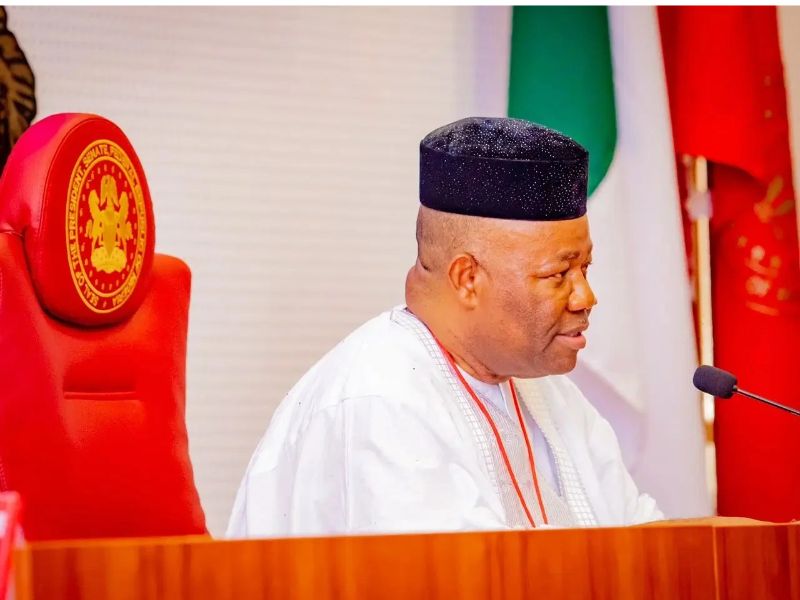

With 68 days to the 2027 general elections, 375 judges were inaugurated on Monday to serve on Election Petition Tribunals across Nigeria.
The tribunals will hear petitions from aggrieved parties challenging the outcomes of the forthcoming elections.
The inauguration marks another step in Nigeria’s preparations for the 2027 polls. The Independent National Electoral Commission (INEC) has also intensified preparations, including the publication of the preliminary voters’ register and recruitment of ad hoc election personnel.
Section 285(1) and (2) of the 1999 Constitution, as amended, empowers the President of the Court of Appeal to constitute Election Petition Tribunals.
These tribunals handle disputes arising from National and State Houses of Assembly elections. They also adjudicate disputes arising from governorship elections.
Similarly, Section 134(3)(a) and (b) of the Electoral Act, 2026, prescribes timelines for constituting tribunals and opening their registries.
Court of Appeal President Charges Tribunal Judges
Speaking at the inauguration ceremony in Abuja, the President of the Court of Appeal, Justice Monica Dongban-Mensem, highlighted the importance of electoral justice.
The event took place at the Body of Benchers Complex in Abuja.
She said the inauguration demonstrated a collective commitment to constitutional democracy, the rule of law and electoral integrity.
“This gathering is more than a ceremonial event; it is an important institutional preparation for one of the most consequential responsibilities entrusted to the judiciary,” she said.
Dongban-Mensem stressed that credible elections require effective mechanisms for resolving electoral disputes.
She explained that the judiciary plays a crucial role in protecting the people’s mandate and strengthening democratic governance.
“Through the fair determination of such disputes, the Judiciary safeguards the people’s mandate, upholds constitutional supremacy and sustains public confidence in democratic governance,” she added.
Her remarks come amid growing discussions about electoral transparency and institutional independence ahead of 2027. The Obidient Movement’s concerns about INEC’s proposed AI deployment have also featured in these discussions.
Meanwhile, President Bola Tinubu has nominated four national commissioners and two resident electoral commissioners. Read about the new INEC commissioner nominations.
375 Judges Selected From Courts Nationwide
The Court of Appeal President urged the judges to uphold professionalism and impartiality throughout their assignments.
She reminded them that Nigerians would closely scrutinise their conduct and decisions.
Dongban-Mensem disclosed that the 375 judges came from different courts and judicial institutions across the country.
She explained that 138 judges had previously served on Election Petition Tribunals. The remaining 237 judges were newly nominated.
The composition combines judicial experience with fresh appointments ahead of the 2027 electoral disputes.
Judiciary Faces Expectations Ahead of 2027 Elections
The inauguration comes as political parties intensify preparations for the next general elections.
Several political disputes have already emerged over party leadership, candidate selection and electoral processes.
Recently, a Federal High Court delivered a judgment affecting the leadership of the African Democratic Congress. The ruling also raised questions about Atiku Abubakar’s candidacy. Read about the court judgment nullifying the Mark-led ADC leadership.
The judgment has generated reactions from political stakeholders, including the ADC’s warning to the APC over Nigeria’s democratic stability. The party’s position is contained in its response to the court ruling.
Other parties have also faced legal challenges over their candidates. A recent ruling concerning the NDC’s Enugu West primary further highlights the role of courts in electoral disputes. Read about the court’s decision on the Enugu NDC primary.
Similarly, ADC Enugu West candidate Juliet Ani has challenged attempts to claim her party’s senatorial ticket. Her position appears in the report on her warning against claiming the ADC candidacy.
Former NBA President Osigwe has also questioned politicians’ growing reliance on courts rather than voters to determine election outcomes. Read his comments on the judicialisation of Nigeria’s electoral process.
Meanwhile, Festus Keyamo has weighed in on the ADC leadership controversy. He maintained that the party would participate in the 2027 elections, although Atiku’s candidacy remained uncertain. Read Keyamo’s position on the ADC and Atiku.
The growing disputes have placed the judiciary under increasing public attention. They also reinforce the importance of impartial decisions and timely resolution of election petitions.
With 375 judges now inaugurated, the Election Petition Tribunals are preparing to handle disputes that may arise from the 2027 general elections.
Their decisions will play an important role in determining electoral justice, protecting democratic rights and sustaining public confidence in Nigeria’s electoral system.