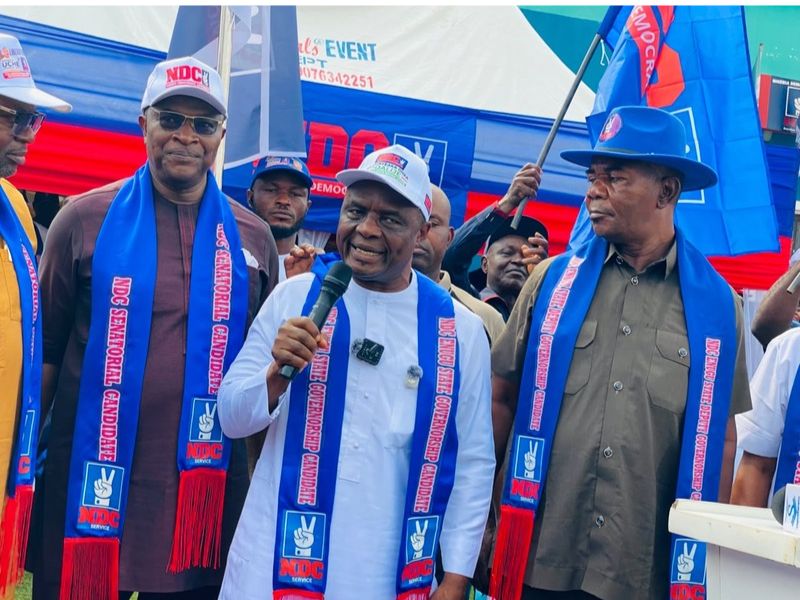
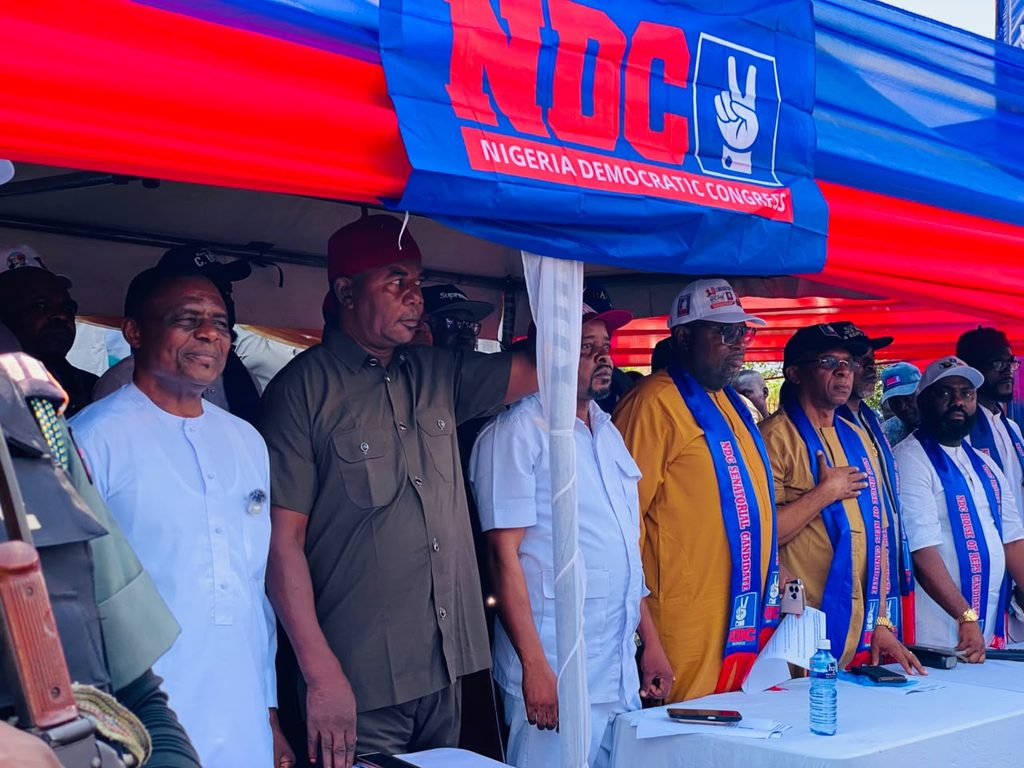
The Nigeria Democratic Congress (NDC) governorship candidate in Enugu State has unveiled his 2027 policy blueprint. He tagged the manifesto “The Rescue Mission, 2027: Make Enugu Great Again For All.”
The proposed agenda promises reforms across taxation, land administration, security, education, healthcare and infrastructure. It also highlights workers’ welfare and rural development.
The candidate said his proposed administration would pursue a safer, productive and inclusive Enugu. He also pledged to ensure that public resources benefit residents across all 17 local government areas and 260 electoral wards.
According to him, the Rescue Mission would address excessive taxation, opaque government transactions and urban-centred development. It would also promote enterprise, transparency, rural development and measurable public service delivery.
The candidate identified ten major governance challenges behind the manifesto. These include multiple taxation, land disputes, questionable public-private partnerships and rising public debt.
Other concerns include unpaid retirement benefits, rural neglect and inadequate public utilities. He also raised concerns about Smart Green Schools implementation and alleged political intimidation of dissenting voices.
The manifesto rests on five policy pillars. They cover a Great Economy for All, Governance and Key Institutions, Social Services and Human Development, the Rural Rescue Compact, and his governing philosophy.
NDC Promises Tax Relief, Market Traders’ Compensation
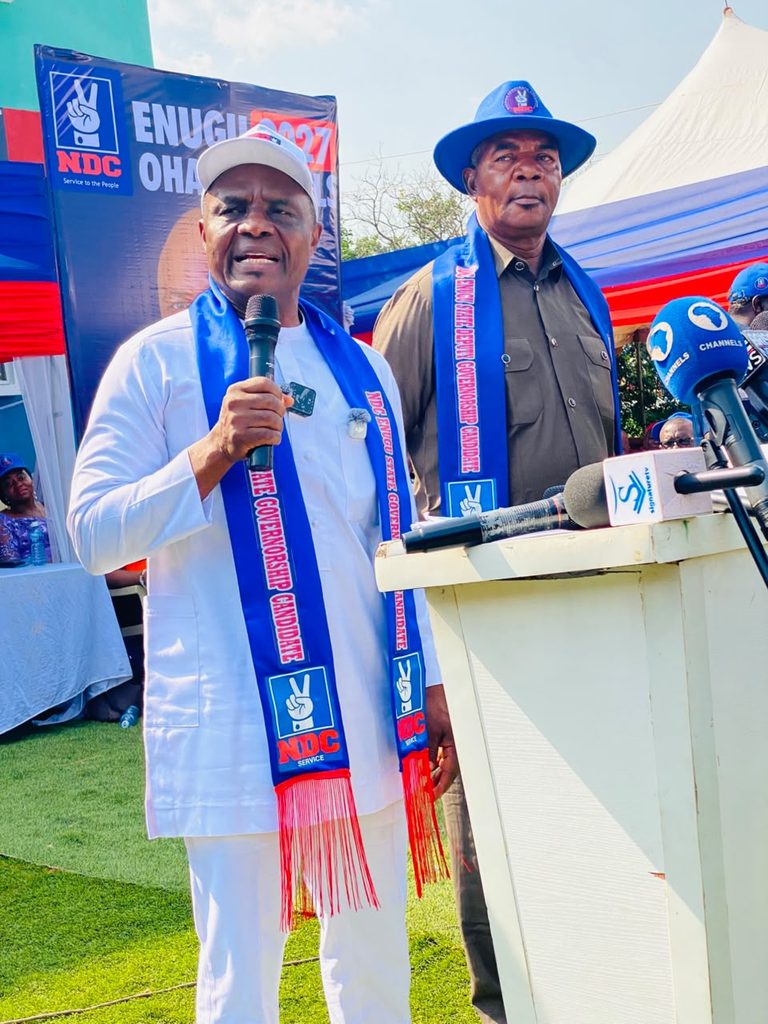
A major part of the NDC Enugu Rescue Mission 2027 focuses on economic recovery. The candidate promised measures to protect businesses and reduce operating costs.
He pledged to establish an independent Market Traders Recovery Committee within seven days of assuming office. The committee would investigate demolitions and document affected traders.
The exercise would cover Ogige Nsukka, Garriki, Holy Ghost and Abakpa markets. It would also include the Nnamdi Azikiwe Stadium.
According to the manifesto, the committee would submit a preliminary report within 30 days. Independent compensation assessments would then begin within 60 days.
The candidate also promised emergency recovery assistance within 90 days. His proposed administration would identify temporary or replacement trading spaces for affected traders.
Furthermore, he proposed an independently audited Market Traders Recovery Fund. The fund would support verified claims and help affected businesses recover.
On taxation, the candidate promised to end what he described as unjustified daily tolls. He also pledged to tackle multiple taxation, arbitrary assessments and unauthorised revenue collections.
His proposed reforms include a Single Unified Business Assessment System. The system would introduce electronic payments, verifiable receipts and accessible complaints channels.
The manifesto also proposes 12 months of state-level tax relief for eligible registered micro and small businesses. The programme would operate within the lawful powers of state and local governments.
Candidate Vows to Review Enugu Land Laws, Reduce Charges
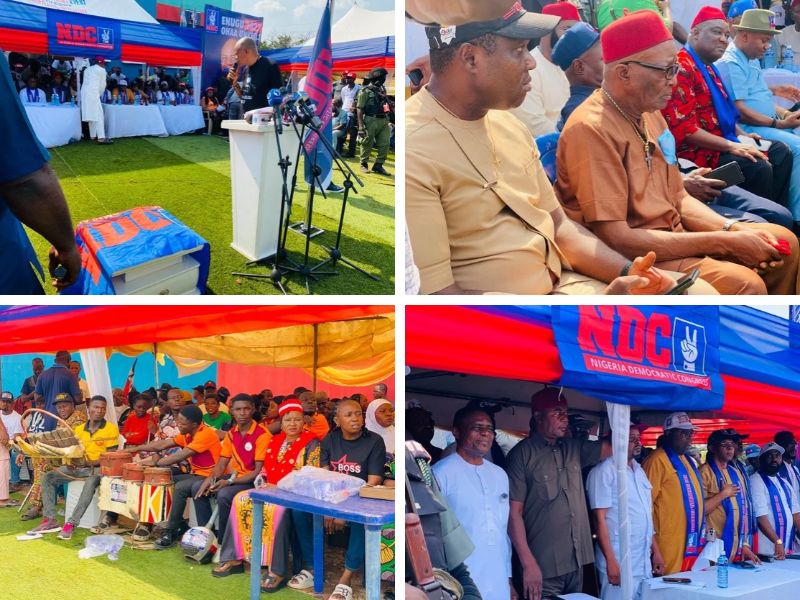
The NDC candidate also promised reforms in land administration and housing. He said his administration would review Executive Order No. 1 of 2025.
The review would also cover the Enugu State Land Use Regulation 2025. According to him, the changes would address excessive land charges and protect property rights.
He further pledged to prevent arbitrary displacement through clearer land administration policies. A Land and Housing Policy Review Committee would begin work within his first 100 days.
The committee would publish its findings and a revised fee schedule within six months. The proposed reforms would also digitise priority land records and improve title processing.
In addition, the candidate promised to promote affordable housing. He also proposed a 24-Month Special Business Land Directive for qualifying investors.
Under the directive, eligible investors would receive free land for commercial and industrial projects. However, they must achieve at least 60 per cent structural development or operational deployment within 24 months.
Investors who fail to meet the requirement would lose their allocations. The land would revert to the state, according to the proposal.
Three Agro-Industrial Corridors, Ranching Facilities Planned

The manifesto identifies agriculture as a major driver of economic diversification. It also links the sector to food security and job creation.
To support this agenda, the candidate proposed three specialised agro-industrial corridors. Each senatorial district would host one corridor.
Enugu North would focus on yam, cassava, yellow pepper, oil palm and rice. Meanwhile, Enugu West would prioritise cashew, cassava, rice, oil palm and legumes.
Enugu East would concentrate on poultry, fisheries, vegetables and agricultural logistics. The candidate said these specialisations would support production and processing across the state.
He also proposed three modern ranching and livestock-processing facilities. Each senatorial district would host one facility under his proposed Odalije Ranching Model.
NDC Plans Independent Power Plants, Promises 24-Hour Electricity
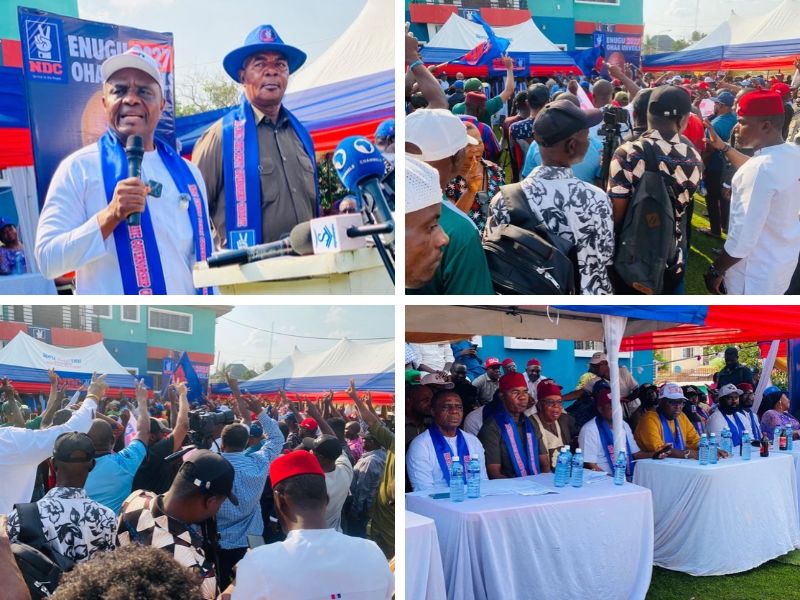
The candidate identified reliable electricity as a major priority. He promised to pursue affordable power through independent generation, renewable energy and private-sector investment.
Drawing on his experience as a former Federal Permanent Secretary in the Ministry of Power, he outlined his approach. He said he would consult energy experts, including former Ministers of Power, Professor Barth Nnaji and Professor Chinedu Nebo.
The manifesto proposes state-owned independent power plants. The candidate said these facilities would provide affordable and uninterrupted 24-hour electricity to homes, businesses and industries.
His energy plan also includes solar power, battery storage and mini-grids. These facilities would serve markets, industrial clusters, schools, healthcare centres and rural communities.
Beyond electricity, the candidate promised to promote the responsible development of coal, natural gas and other minerals. He also highlighted local processing, industrialisation and investment in the digital economy.
The proposed agenda further supports information and communication technology, innovation and digital skills. It also identifies technology entrepreneurship and the creative industry as growth areas.
NDC Targets Tourism Development, Enugu Nightlife Revival
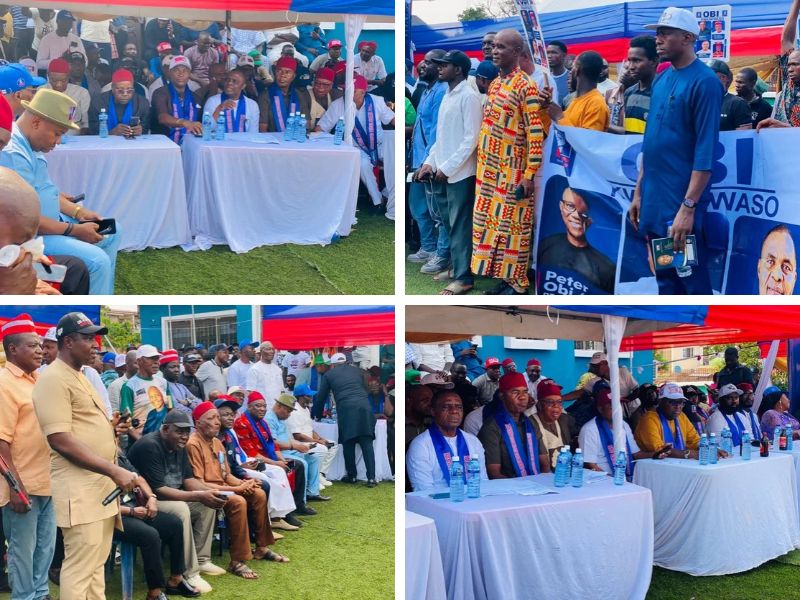
The manifesto also identifies tourism and the creative economy as potential sources of investment and employment.
The candidate listed several attractions for development. They include Ugbo Dam, Mpu Dam, Awhum Waterfall, Opi Lakes and Iyi Nzu Waterfall.
Other destinations include Milken Hill and Ngwo Pine Forest. He said tourism development could create jobs and increase economic activity.
The candidate also promised to revive Enugu’s night-time economy. His proposal includes safer entertainment districts, improved street lighting and stronger security.
He also pledged support for festivals, hospitality businesses and creative enterprises. In addition, he wants to position Akanu Ibiam International Airport as a gateway.
The airport, according to the manifesto, would support trade, tourism, investment and diaspora engagement.
Candidate Promises Transparent Government, Stronger Institutions
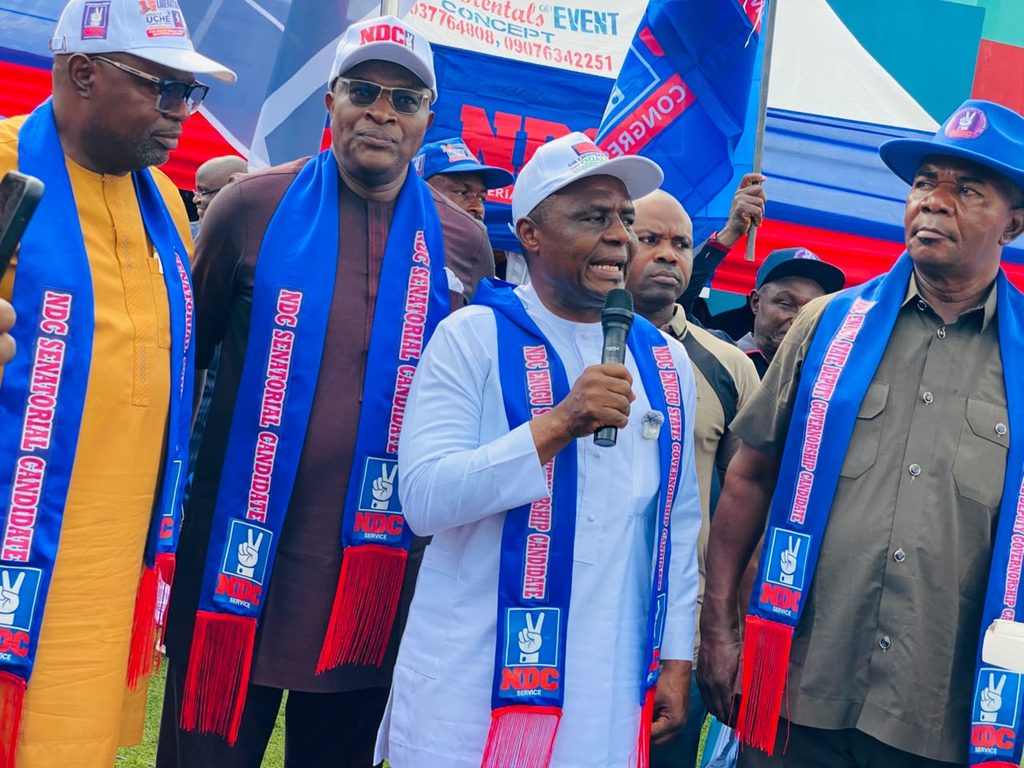
On governance, the NDC candidate promised greater transparency in public finances. He pledged regular publication of government revenue, expenditure, debt obligations and audited financial reports.
He also promised open procurement processes. Furthermore, he proposed independent audits and regular public reports on public-private partnership arrangements.
The candidate said government borrowing must remain transparent and properly justified. He added that loans should support productive development.
On local government administration, he promised to restore council autonomy. He also pledged direct statutory allocations and credible council elections.
The proposed administration would strengthen the Enugu State House of Assembly’s oversight responsibilities. It would also establish the House of Assembly Service Commission within six months.
The candidate further pledged to uphold the judiciary’s constitutional financial autonomy and self-accounting.
NDC Proposes Statewide Security Command Centre
Security also features prominently in the Rescue Mission. The candidate promised a coordinated network covering all parts of Enugu State.
His proposed administration would establish a statewide Command-and-Control Centre. The facility would coordinate security operations across all 17 local government areas.
The plan also includes trained and accountable community security volunteers. Forest guards would operate across the state’s 260 wards.
The proposed system would support early warnings, emergency reporting and rapid responses. It would also strengthen security along identified highways and rural routes.
The manifesto specifically mentions the Nike-Opi-Nsukka Road, Uzo-Uwani and Isi-Uzo. It also identifies the Udi-Ezeagu axis for stronger security operations.
Additionally, the candidate promised increased financial and logistical support for security agencies. He said the proposed administration would ensure transparency in such support.
NDC Promises to Clear Gratuity Arrears Within 24 Months
Workers’ welfare and retirees’ benefits form another major part of the manifesto. The candidate promised to establish an Enugu State Retirees Gratuity Redemption Fund.
He proposed an independent audit of inherited liabilities. His administration would also publish a verified retirees’ register and payment schedules.
The candidate pledged to clear inherited gratuity arrears within his first 24 months. He also proposed a retirement benefits processing centre.
The centre would coordinate relevant ministries, pension authorities and public institutions. Under the proposed system, officials would process retirement documents months before workers leave service.
This process would allow authorities to calculate and verify gratuities early. It would also help government make the necessary budgetary provisions.
The candidate said retirees should receive their gratuities promptly. He proposed payment alongside their final salaries, where possible.
He also expressed concern about pension payments. According to him, some retirees receive as little as ₦447 monthly.
Consequently, he promised a Consequential Pension Adjustments Programme. The programme would seek to align pension payments with prevailing economic realities.
NDC Targets One 24-Hour Primary Healthcare Centre Per Ward
The candidate promised to improve access to affordable and quality healthcare. His proposals include stronger primary healthcare facilities, better staffing and essential medical equipment.
He also highlighted preventive healthcare and improved service delivery. A major pledge involves upgrading at least one primary healthcare centre in every ward.
The candidate said the facilities would provide 24-hour services. He also promised a fairer distribution of healthcare facilities, especially in underserved rural communities.
Smart Green Schools Programme to Undergo Independent Review
On education, the candidate promised to prioritise learning outcomes and safe school infrastructure. He also highlighted teachers’ welfare and access to quality education.
He proposed an independent review of the Smart Green Schools programme. The review would identify defective infrastructure and recommend necessary interventions.
His education plan also includes rehabilitating existing schools. It proposes improved teacher recruitment, training and access to education in rural communities.
The manifesto further addresses government relations with missionary-owned schools. The candidate recalled that the state returned 1,007 public schools to their original missionary owners as of 2009.
He promised a comprehensive audit of outstanding issues. His proposed administration would also complete the handover process.
Furthermore, he proposed a Government-Church Education Partnership. The arrangement would clearly define the responsibilities of government and participating churches.
The candidate also proposed a Mission Schools Development Fund. It would support infrastructure rehabilitation, classroom equipment, staff salaries and welfare.
He said the ultimate goal would be affordable and inclusive education. He also pledged to improve learning opportunities for every child in Enugu State.
NDC Promises 24-Hour Water Supply, 260 Solar-Powered Schemes
The candidate identified water supply as another major challenge. He promised to declare a state of emergency on water infrastructure.
His proposed administration would audit existing water facilities. It would also work towards uninterrupted 24-hour water supply in Enugu and other cities within three years.
The plan includes expanding solar-powered water infrastructure. It also covers sanitation, waste management and erosion control.
Under the Rural Rescue Compact, the candidate promised one solar-powered water scheme in each ward. He set a target of 260 schemes by the end of his administration’s third year.
Women, Youths and Vulnerable Groups to Receive Support
The manifesto outlines support programmes for women, young people and vulnerable groups. It also includes persons with disabilities, widows and elderly citizens.
For young people, the candidate promised vocational and digital skills training. He also pledged enterprise support, employment opportunities, sports development and creative industry programmes.
Women would receive improved access to credit, training and markets. The candidate proposed cooperative arrangements to support these opportunities.
He also promised to protect widows against harmful traditional practices and property dispossession. Additionally, he pledged to end what he described as mortuary taxation on bereaved families.
Other proposals include better accessibility and employment opportunities for persons with disabilities. The candidate also promised stronger social protection for elderly citizens and the poorest households.
Rural Development to Receive 60% of New Road Infrastructure
The Rural Rescue Compact places rural communities at the centre of the proposed development agenda.
The candidate promised to extend development projects and public services across all 17 local government areas. He also pledged to reach all 260 wards, regardless of their location.
Under the plan, rural local government areas would receive 60 per cent of new road infrastructure.
To strengthen accountability, the candidate proposed a Rural Development Delivery Unit. The unit would publish quarterly performance scorecards for every local government area.
These scorecards would help residents monitor project implementation. They would also allow citizens to assess how government distributes development projects across the state.
NDC Outlines First 100 Days, Three-Year Implementation Timeline
The manifesto contains several time-bound commitments. The candidate said these targets would make his proposed administration’s performance measurable.
The Market Traders Recovery Committee would begin work within seven days of assuming office. It would submit a preliminary report within 30 days.
Independent compensation assessments would start within 60 days. The proposed administration would also identify temporary or replacement trading spaces within 90 days.
The Land and Housing Policy Review Committee would begin work within 100 days. Its findings and revised fee schedule would follow within six months.
The candidate also promised to establish the House of Assembly Service Commission within six months. He pledged to clear inherited gratuity arrears within 24 months.
Other targets include uninterrupted 24-hour urban water supply within three years. The candidate also promised solar-powered water schemes across all 260 wards by then.
‘Government Must Serve the People’, Candidate Declares
The candidate said the Rescue Mission aims to restore public trust and protect livelihoods. He also wants to create economic opportunities and extend development to every community.
He identified fairness, transparency and measurable results as guiding principles. Other priorities include respect for the rule of law and rural-first development.
The candidate also pledged merit-based public appointments. He said qualified Enugu indigenes would receive appropriate consideration for leadership positions, alongside competence.
Describing the manifesto as a social contract, he urged residents to hold the party accountable. He said the proposed administration would protect public funds and build an economy that creates opportunities.
The candidate also listed key commitments. These include ending punitive taxation, publishing government accounts, paying retirees and protecting land and livelihoods.
Other priorities include stronger security, improved public services and reliable water supply. He also promised to extend development to villages and wards across the state.
The NDC candidate urged Enugu residents to study the manifesto. He called on voters to hold the party accountable for its promises.
The Rescue Mission, 2027, presents the NDC’s proposed alternative ahead of the Enugu governorship election. However, its success would depend on funding, feasibility, implementation and the fulfilment of its commitments.